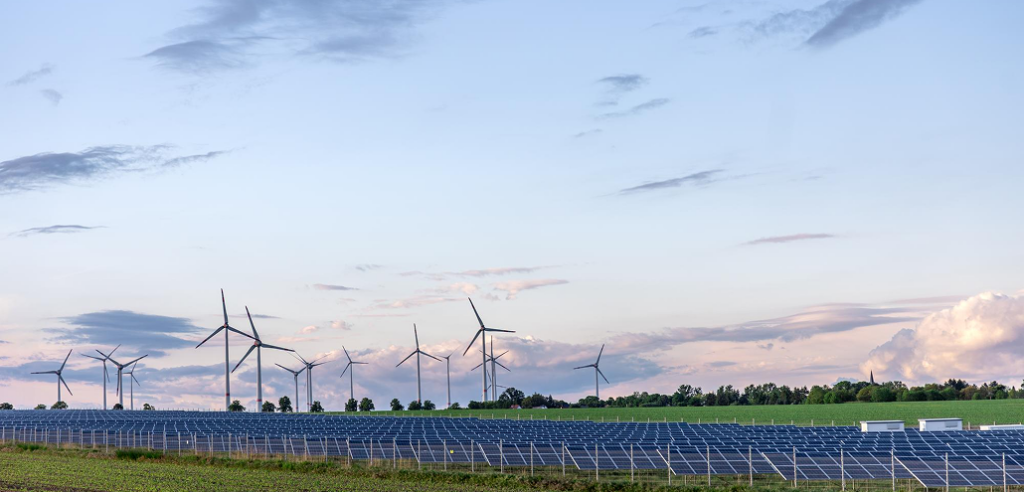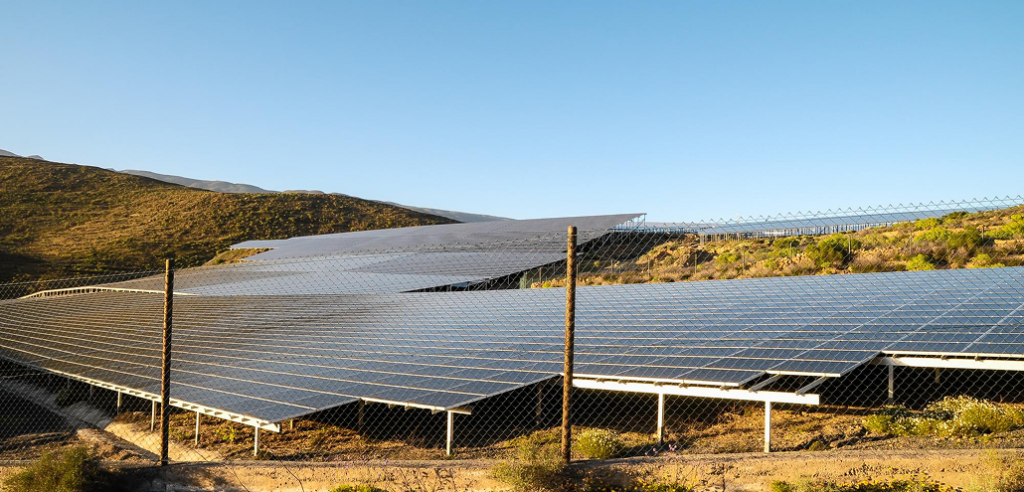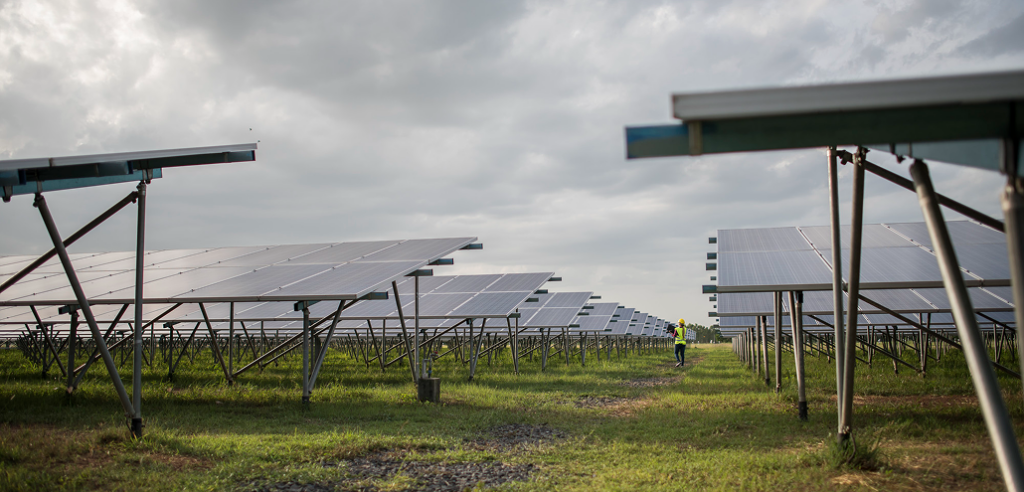
A large scale ground mounted pv system changes the economics of a solar project in ways that catch installers out if they’ve only quoted residential rooftop work. The cost per watt drops as the system grows, but the structural engineering, foundation strategy, incentive mechanism, and racking selection all shift with scale. Quote a 500 kW ground mount the way you’d quote a 10 kW rooftop and you’ll either lose the job or lose money on it.
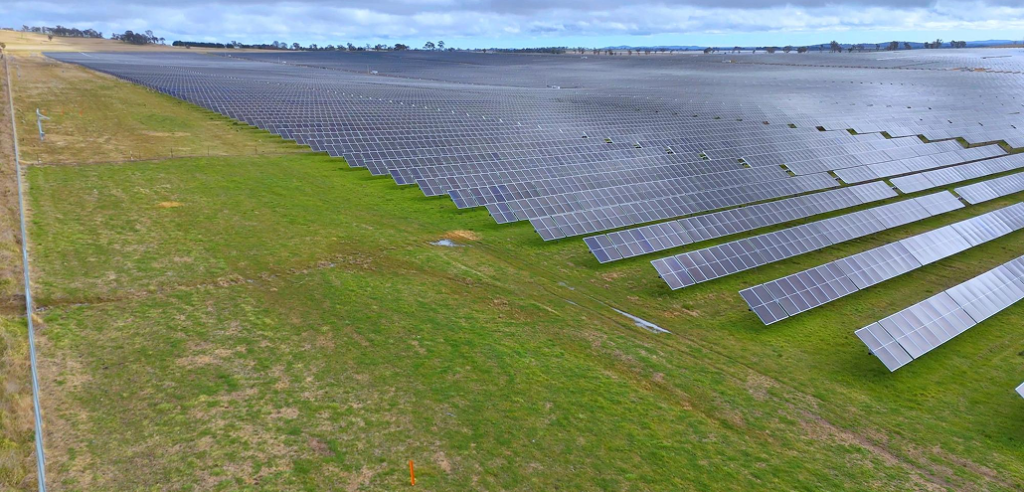
This guide covers what actually changes as ground mounted solar power systems scale up, from 15 kW rural systems through to megawatt utility-scale arrays. We’ll walk through system sizing and economics, the structural and foundation decisions that matter at scale, the incentive mechanisms that change at 100 kW, and what to look for in racking built for large commercial projects.
Key takeaway
- Large scale ground mount economics improve with size: cost per watt drops from around $1.00/W at 20 kW to $0.80/W at 100 kW and lower again above 250 kW.
- The incentive mechanism changes at 100 kW: systems up to 100 kW earn upfront STCs, while larger systems earn ongoing LGCs instead.
- Foundation strategy and structural engineering are the biggest cost and timeline levers on large arrays, not the panels or racking hardware.
- Racking with greater engineering spans reduces the number of posts and foundations per array, which cuts material cost and install time at scale.
- The Nova Ground Mount System is engineered for large scale projects, with ZAM-coated steel, adjustable 5° to 60° tilt, and both ground screw and concrete ballast foundations.
What counts as a large scale ground mounted pv system?
There’s no single industry definition, but for practical purposes in the Australian market, ground mount projects fall into a few bands that behave differently.
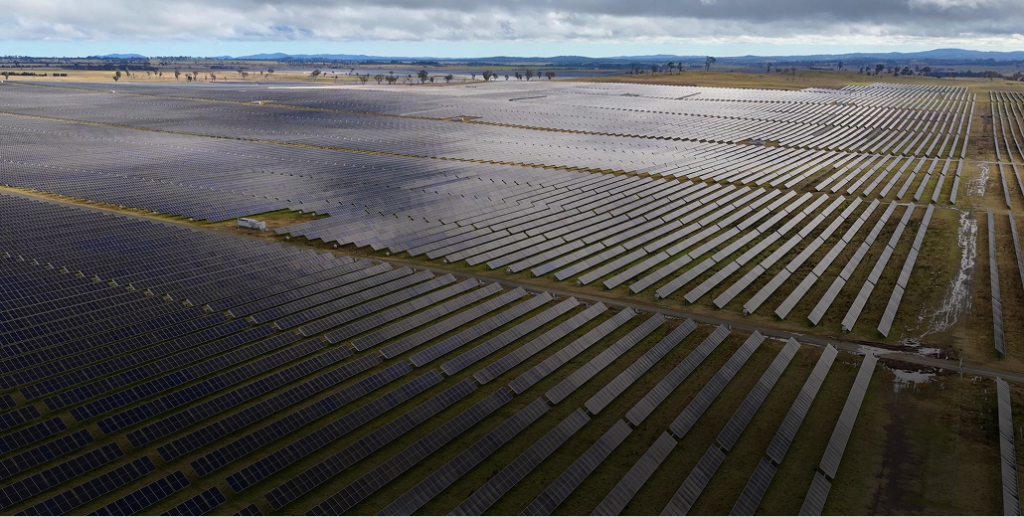
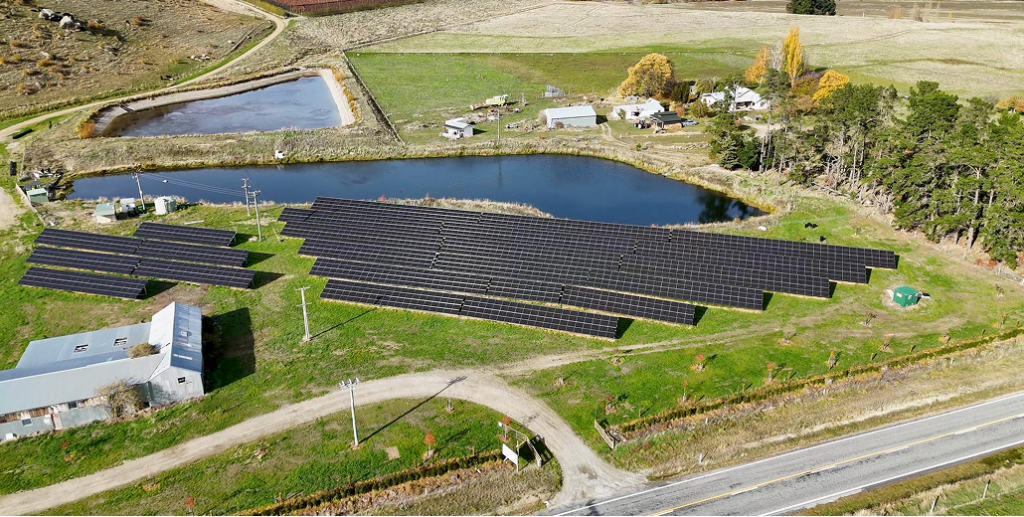
A 15kw ground mount solar system or 20 kw ground mount solar system sits at the small end. These are common for large rural properties, farms, and small businesses. A 15 kW array often ends up ground-mounted specifically because it needs 75 to 90 square metres of space that the available roof can’t provide. From there, systems scale up through mid-size commercial (100 kW), large industrial (250 kW and up), and utility-scale (1 MW and above).
The reason the band matters is that almost everything about the project (economics, incentives, structural engineering, grid connection) changes as you move up. A ground mounted pv system isn’t just a bigger version of the one below it.
System sizing and economics at scale
The single most important economic fact about large scale solar is that cost per watt drops as the system grows. Fixed costs (design, site setup, grid application, mobilisation) get spread across more kilowatts. Current Australian commercial pricing shows roughly $1,000 per kW at 20 kW dropping to around $800 per kW at 100 kW, and $650 to $850 per kW for large industrial installations above 250 kW.
| System size | Typical use case | Indicative installed cost (after STCs) | Incentive mechanism |
|---|---|---|---|
| 15 kW | Large rural home, small business, often needs ground mount for space | ~$14,000 (approx $0.86/W) | STCs (upfront) |
| 20 kW | Small commercial: childcare, medical, retail, farms | ~$18,000–$30,000 (approx $0.90–$1.10/W) | STCs (upfront) |
| 100 kW | Mid-size commercial and industrial | ~$80,000 (approx $0.80/W) | STCs up to 100 kW; LGCs above |
| 250 kW+ | Large industrial, agricultural, utility-adjacent | approx $0.65–$0.85/W | LGCs (ongoing annual credits) |
| 1 MW+ | Utility-scale | approx $1.52/W (utility benchmark, pre-incentive) | LGCs; PPA and grid connection |
Two caveats on these figures. First, ground mount costs more than rooftop for the same capacity because of the civil works, foundations, excavation, and mounting structure add cost that a roof install doesn’t carry. Second, utility-scale pricing works differently again. ARENA’s 2026 Ultra Low-Cost Solar White Paper Update puts Australia’s weighted-average utility-scale installed cost at around USD $1.52 per watt, with balance-of-system costs (labour, civil works, grid connection) now the dominant and most stubborn component.
For a full breakdown of ground mount project costs across scales, see our guide to ground mount solar cost for installers.
The incentive mechanism changes at 100 kW
This is the detail that catches out installers moving from residential into large commercial. Systems up to 100 kW earn small-scale technology certificates (STCs), paid upfront as a discount on the system cost. Systems above 100 kW earn large-scale generation certificates (LGCs) instead, earned annually based on actual generation over the system life.

The practical impact is on cash flow and how you present the numbers to a client. An STC system has a lower effective upfront cost. An LGC system carries the full capital cost upfront but generates an ongoing revenue stream. For a client deciding between a 99 kW and a 110 kW system, the incentive structure can matter as much as the extra generation. Installers who understand this can guide clients to the right side of the threshold for their circumstances.
Nova’s field notes: the 100 kW threshold is a design decision, not just a number
We see installers accidentally cross the 100 kW STC threshold by a few kilowatts and lose the upfront incentive, or deliberately cap a system at 99 kW when the client would have been better served by a larger LGC system. Neither is wrong in every case, but both should be a deliberate choice.
Before finalising the system size on a large commercial quote, model both scenarios: the largest STC-eligible system versus the LGC system the site could support. Show the client the cash flow difference. The right answer depends on their capital position, their tax situation, and how much roof or ground area they actually have. Sizing to the incentive rather than to the load is one of the most common ways large commercial quotes go wrong.
Structure and foundations are the real cost levers at scale
On a residential rooftop, the mounting hardware is a small fraction of the job. On a large ground mount, the structure and foundations become one of the biggest cost and timeline drivers. This is where installers make or lose margin on large projects.
Foundation strategy drives the timeline
The two foundation types (concrete ballast footings and ground screws) behave very differently at scale. Concrete needs 7 to 14 days to cure before structural loading, which on a large array can add weeks to the build. Ground screws are load-bearing immediately, which is why large commercial developers paying interest on construction finance tend to favour them where soil conditions allow. On a 500 kW array, the difference between a foundation type that lets you build continuously and one that forces a two-week cure window is real money.
Engineering spans reduce post and foundation count
Here’s a large-scale factor that installers often overlook: the span between structural supports. A racking system engineered for greater spans needs fewer posts and fewer foundations to cover the same array area. On a large ground mount, that translates directly into fewer excavations or pile drives, less material, and faster installation. The Nova Ground Mount System is engineered with greater spacing spans than many competing systems, which is a meaningful advantage on large commercial projects where post and foundation count multiply quickly across the array.
Wind and structural certification scale with exposure
Large arrays present a large surface to the wind. Structural design under AS/NZS 1170.2 becomes more demanding as the project scales and as the site’s wind region increases. For large projects in higher-wind areas, the racking supplier must provide engineering documentation certifying the system for the specific wind region and terrain category. Our guide to the best solar ground mount system for Australian conditions covers the structural specifications that matter most for high-wind sites.
What to look for in racking for large scale projects
Not all ground mount racking is built for scale. Five things separate a system that performs on large commercial projects from one that only makes sense for small arrays.
Greater engineering spans
As covered above, wider spans between supports mean fewer posts and foundations per array. On large projects, this is one of the biggest levers on both material cost and install time. Ask any supplier for their maximum span figures and compare them directly.
Foundation flexibility as standard
Large sites rarely have uniform soil. A racking system that supports both ground screw and concrete ballast foundations lets the installer adapt to soil variation across a big site without changing suppliers or product lines. This matters more at scale, where a single site might need different foundations in different areas.
Corrosion resistance for a 25-year asset
Large commercial arrays are long-term assets, and corrosion failure across hundreds of structural members is expensive to remediate. Zinc Aluminium Magnesium (ZAM) coated steel offers significantly better corrosion resistance than standard galvanised steel, particularly in coastal and humid Australian conditions where most large projects are sited.
Fast, repeatable installation
On a large array, every minute saved per module compounds across thousands of modules. Pre-fabricated holes, single-bolt rail clamps, module clamps with integrated earthing pins, and minimised component count all reduce on-site time. At scale, install efficiency is often the difference between a profitable project and a marginal one.
Engineering and technical support
Large projects involve soil reports, structural calculations, wind certification, and grid connection paperwork. A racking supplier with a responsive engineering team reduces the risk of costly rework and helps installers navigate the complexity that comes with scale. On a large commercial project, this support is worth more than a small saving on hardware.
Nova’s field notes: quote the whole system, not just the panels
The most common mistake we see on large commercial ground mount quotes is under-costing everything that isn’t panels and inverters. On a rooftop job, the balance-of-system cost is modest. On a large ground mount, the civil works, foundations, structural steel, trenching, and grid connection can rival or exceed the cost of the modules themselves.
When you scope a large ground mount, build the quote from the ground up: geotechnical survey, foundation type and count, structural racking, trenching and cabling, grid connection, and commissioning. The projects that go wrong are almost always the ones where the installer treated the ground mount like a rooftop job with longer legs. It isn’t.
Build smarter large scale ground mount projects with Nova
At Nova, we’ve spent more than 15 years designing solar mounting systems that make installers’ lives easier and large projects more profitable. The Nova Ground Mount System is built around our “less is more” philosophy: fewer components, greater engineering spans, single-bolt rail clamps, module clamps with integrated earthing pins, and pre-fabricated holes for tilt from 10° to 30°. It supports module sizes up to 2190 x 1150mm in portrait orientation, both ground screw and concrete ballast foundations, and comes in Zinc Aluminium Magnesium coated steel for superior corrosion resistance. The system is snow load rated, structural stability tested, and corrosion resistance tested. It installs up to 30% faster than traditional ground mount systems, is backed by a 25-year warranty, and is supported by a technical team that works with you from soil report to commissioning.
Whether you’re quoting a 20 kW rural ground mount or scoping a multi-megawatt commercial array, speak to the Nova technical team for project-specific support, or explore the NOVA Ground Mount System specifications in detail.

Frequently asked questions
How much land does a large scale ground mounted pv system need?
As a rule of thumb, a ground mounted pv array needs roughly 1.5 to 2 hectares per megawatt of capacity, depending on panel efficiency, row spacing, and tilt angle. A 100 kW system needs roughly 1,500 to 2,000 square metres. Row spacing matters at scale: rows need enough gap to avoid inter-row shading, which increases with tilt angle and latitude. Steeper tilt means more shading and more land per watt.
At what size should I switch from rooftop to ground mount?
It’s driven by available roof space and site conditions, not a fixed system size. A 15 kW system often needs ground mounting because it requires 75 to 90 square metres of unshaded, well-oriented roof that many sites don’t have. For commercial sites with large, simple roofs, rooftop can make sense well above 100 kW. Ground mount wins when roof space is limited, roof condition is poor, or the site has spare land and the client wants optimal orientation and tilt.
Do large ground mount systems still qualify for the STC rebate?
Only up to 100 kW. Systems up to 100 kW earn upfront STCs. Above 100 kW, systems earn large-scale generation certificates (LGCs) instead, which are earned annually based on actual generation rather than paid upfront. This changes the cash flow profile of the project significantly, and it’s a key consideration when sizing a system near the threshold.
What’s the payback period on a commercial ground mount system?
Most well-sized commercial solar systems in Australia see payback in 3 to 5 years, depending on electricity prices, self-consumption rate, and available incentives. Ground mount systems carry higher upfront costs than rooftop due to civil works, but the ability to optimise orientation and tilt can improve generation. Payback is most favourable when the site consumes most of its generation on-site during daylight hours.
Does Nova supply racking for utility-scale ground mount projects?
Yes. The Nova Ground Mount System scales from small rural arrays up to megawatt-scale commercial and utility projects using the same engineered components. The greater engineering spans, foundation flexibility, and fast installation design are specifically valuable at scale, where post count, foundation count, and install time multiply across the array.