A large scale ground mounted pv system changes the economics of a solar project in ways that catch installers out if they’ve only quoted residential rooftop work. The cost per watt drops as the system grows, but the structural engineering, foundation strategy, incentive mechanism, and racking selection all shift with scale. Quote a 500 kW ground mount the way you’d quote a 10 kW rooftop and you’ll either lose the job or lose money on it.
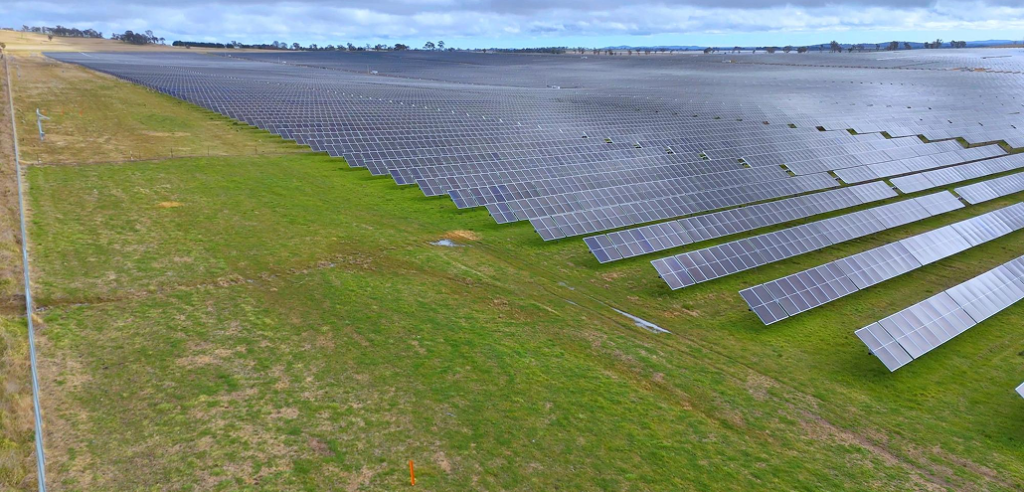
This guide covers what actually changes as ground mounted solar power systems scale up, from 15 kW rural systems through to megawatt utility-scale arrays. We’ll walk through system sizing and economics, the structural and foundation decisions that matter at scale, the incentive mechanisms that shift with system size across European markets, and what to look for in racking built for large commercial projects.
Key takeaway
- Large scale ground mount economics improve with size: fixed costs spread across more kilowatts, so the cost per watt falls as the system grows.
- Incentive mechanisms shift with system size and vary sharply by country: in Germany, systems up to 100 kWp receive automatic EEG feed-in tariffs, while larger systems move to the competitive Marktpraemie auction.
- Foundation strategy and structural engineering are the biggest cost and timeline levers on large arrays, not the panels or racking hardware.
- Racking with greater engineering spans reduces the number of posts and foundations per array, which cuts material cost and install time at scale.
- The Nova Ground Mount System is engineered for large scale projects, with ZAM-coated steel, 10° to 30° tilt, snow load rating, and both ground screw and concrete ballast foundations.
What counts as a large scale ground mounted pv system?
There’s no single industry definition, but for practical purposes across European markets, ground mount projects fall into a few bands that behave differently.
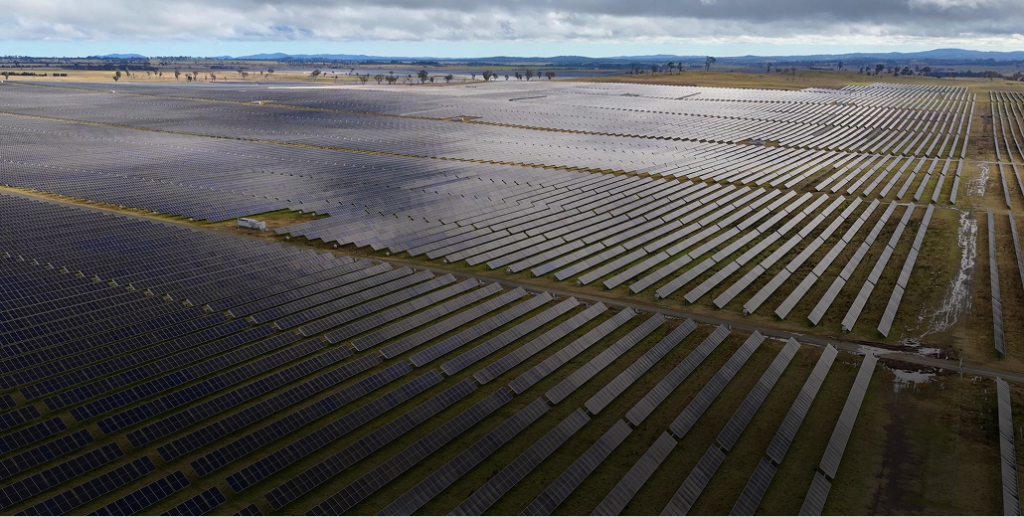
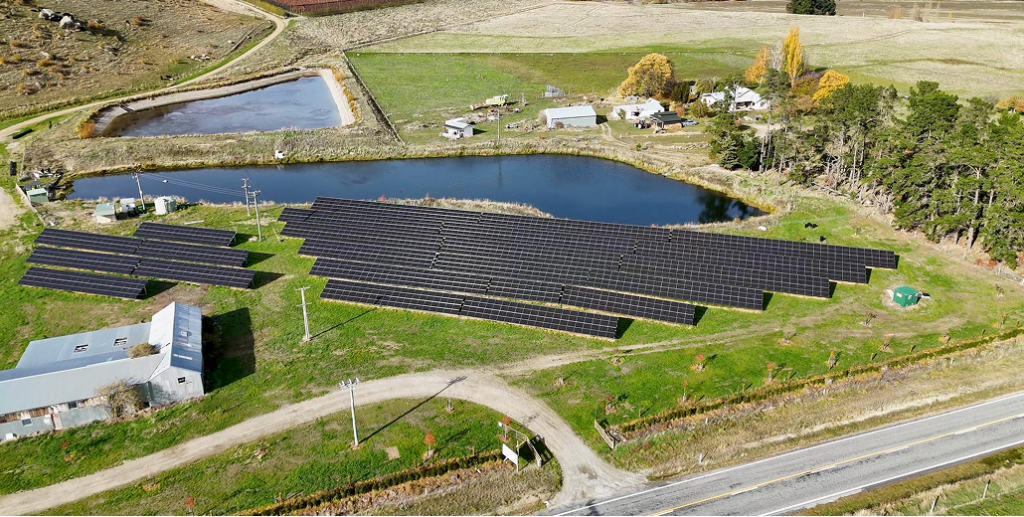
A 15kw ground mount solar system or 20 kw ground mount solar system sits at the small end. These are common for large rural properties, farms, and small businesses. A 15 kW array often ends up ground-mounted specifically because it needs 75 to 90 square metres of space that the available roof can’t provide. From there, systems scale up through mid-size commercial (100 kWp), large industrial (250 kW and up), and utility-scale (1 MW and above).
The reason the band matters is that almost everything about the project (economics, incentive mechanism, structural engineering, grid connection) changes as you move up. A ground mounted pv system isn’t just a bigger version of the one below it.
System sizing and economics at scale
The single most important economic fact about large scale solar is that cost per watt drops as the system grows. Fixed costs (design, site setup, grid application, mobilisation) get spread across more kilowatts. A small commercial array carries a higher per-kilowatt cost than a large industrial one, and the gap is significant across the range from 20 kW to 250 kW and beyond.
Two caveats. First, ground mount costs more than rooftop for the same capacity, because the civil works, foundations, excavation, and mounting structure add cost that a roof install doesn’t carry. Second, utility-scale pricing works differently again: IRENA’s cost data puts European utility-scale solar at competitive levels, with balance-of-system costs (labour, civil works, grid connection) now the dominant component as module prices have fallen. Pricing varies significantly across European markets, so the figures a project carries in Germany differ from those in Spain or Poland.
For a full breakdown of ground mount project costs across scales, see our guide to ground mount solar cost for installers.
| System size | Typical use case | What changes at this scale (Germany example) |
|---|---|---|
| 15 kW | Large rural home, small business; often ground-mounted for space | Automatic EEG feed-in tariff; MaStR registration required |
| 20 kW | Small commercial: farms, workshops, retail | Automatic EEG feed-in tariff; self-consumption model often wins |
| 100 kWp | Mid-size commercial and industrial | Threshold: at/above 100 kWp, systems move to the Marktpraemie auction |
| 250 kW+ | Large industrial, agricultural, Agri-PV | Competitive auction premiums; possible Agri-PV or state grants |
| 1 MW+ | Utility-scale | Bundesnetzagentur tenders, grid connection, PPA |
The incentive mechanism shifts with system size
This is the detail that catches out installers moving from residential into large commercial, and in Europe it comes with a twist: the rules vary by country. Under EU Directive RED II every property owner has the right to generate and self-consume solar electricity, but each member state sets its own support mechanism. Taking Germany, Europe’s largest solar market, as the reference: systems up to 100 kWp receive an automatic EEG feed-in tariff, while systems at or above 100 kWp move into the competitive Marktpraemie auction run by the Bundesnetzagentur, where 20-year premiums are awarded to the lowest bids.

That 100 kWp threshold is a genuine design decision in Germany, much like the way system size changes the incentive elsewhere. The practical impact is on cash flow and how you present the numbers to a client. A sub-100 kWp system has a predictable guaranteed tariff. A larger system trades that certainty for auction-based pricing, but unlocks scale economies on the hardware and installation. For a client deciding between a 99 kWp and a 110 kWp system, the mechanism can matter as much as the extra generation.
Outside Germany, the specifics change but the principle holds: the incentive mechanism and the thresholds that trigger it vary with system size. France uses the EDF OA purchase obligation, Italy the GSE net-billing schemes, Spain a simplified compensation model, and several markets are shifting from export tariffs toward self-consumption as the primary driver. The lesson for installers working across borders is that the incentive framework has to be confirmed country by country before a large system is sized, because the optimal size can differ sharply between two otherwise identical sites in different member states.
Nova’s field notes: confirm the national incentive framework before sizing
The most common mistake we see on large European commercial ground mounts is carrying an assumption from one country’s incentive scheme into another. A system size that’s optimal under Germany’s EEG and Marktpraemie split can be the wrong size under France’s EDF OA rules, Italy’s GSE schemes, or a Spanish self-consumption model. The thresholds, the auction rules, and the balance between export tariff and self-consumption all move.
Before finalising the system size on a large commercial quote, confirm the specific national incentive framework and the thresholds that apply, then model the project against them. Show the client the cash flow under the mechanism that actually applies to their site. Sizing to the wrong country’s rules is one of the most common ways cross-border commercial quotes go wrong.
Structure and foundations are the real cost levers at scale
On a residential rooftop, the mounting hardware is a small fraction of the job. On a large ground mount, the structure and foundations become one of the biggest cost and timeline drivers. This is where installers make or lose margin on large projects.
Foundation strategy drives the timeline
The two foundation types (concrete ballast footings and ground screws) behave very differently at scale. Concrete needs 7 to 14 days to cure before structural loading, which on a large array can add weeks to the build. Ground screws are load-bearing immediately, which is why large commercial developers paying interest on construction finance tend to favour them where soil conditions allow. On a 500 kW array, the difference between a foundation type that lets you build continuously and one that forces a two-week cure window is real money. Europe’s varied ground conditions, from Baltic sand to alpine rock to northern frost depth, mean the foundation decision changes from site to site.
Engineering spans reduce post and foundation count
Here’s a large-scale factor that installers often overlook: the span between structural supports. A racking system engineered for greater spans needs fewer posts and fewer foundations to cover the same array area. On a large ground mount, that translates directly into fewer excavations or pile drives, less material, and faster installation. The Nova Ground Mount System is engineered with greater spacing spans than many competing systems, which is a meaningful advantage on large commercial projects where post and foundation count multiply quickly across the array.
Wind, snow, and structural certification scale with exposure
Large arrays present a large surface to the wind, and structural demand under Eurocode EN 1991-1-4 (wind) and EN 1991-1-3 (snow) grows as the project scales. Because the Eurocode applies through a National Annex for each country, a large system needs certification for the specific country’s wind and snow parameters. Snow loading in particular can dominate the structural design in alpine and northern regions. Our guide to the best solar ground mount system for European conditions covers the structural specifications that matter most.
What to look for in racking for large scale projects
Not all ground mount racking is built for scale. Five things separate a system that performs on large commercial projects from one that only makes sense for small arrays.
Greater engineering spans
As covered above, wider spans between supports mean fewer posts and foundations per array. On large projects, this is one of the biggest levers on both material cost and install time. Ask any supplier for their maximum span figures and compare them directly.
Foundation flexibility as standard
Large sites rarely have uniform soil, and European ground conditions vary enormously across the continent. A racking system that supports both ground screw and concrete ballast foundations lets the installer adapt to soil variation across a big site without changing suppliers or product lines.
Corrosion resistance for a 25-year asset
Large commercial arrays are long-term assets, and corrosion failure across hundreds of structural members is expensive to remediate. Zinc Aluminium Magnesium (ZAM) coated steel offers significantly better corrosion resistance than standard galvanised steel, which matters most in Europe’s Atlantic and Mediterranean coastal zones and anywhere road de-icing salt is present.
Fast, repeatable installation
On a large array, every minute saved per module compounds across thousands of modules. Pre-fabricated holes, single-bolt rail clamps, module clamps with integrated earthing pins, and minimised component count all reduce on-site time. With European labour rates varying widely by market, install efficiency improves margin everywhere from the Nordics to Eastern Europe.
Engineering and technical support
Large projects involve soil reports, structural calculations, wind and snow certification under the relevant National Annex, and grid connection paperwork. A racking supplier with a responsive engineering team reduces the risk of costly rework and helps installers navigate the complexity that comes with scale. On a large commercial project, this support is worth more than a small saving on hardware.
Nova’s field notes: quote the whole system, not just the panels
The most common mistake we see on large commercial ground mount quotes is under-costing everything that isn’t panels and inverters. On a rooftop job, the balance-of-system cost is modest. On a large ground mount, the civil works, foundations, structural steel, trenching, and grid connection can rival or exceed the cost of the modules themselves.
When you scope a large ground mount, build the quote from the ground up: geotechnical survey, foundation type and count, structural racking, trenching and cabling, grid connection, and commissioning. The projects that go wrong are almost always the ones where the installer treated the ground mount like a rooftop job with longer legs. It isn’t.
Build smarter large scale ground mount projects with Nova
At Nova, we’ve spent more than 15 years designing solar mounting systems that make installers’ lives easier and large projects more profitable. The Nova Ground Mount System is built around our “less is more” philosophy: fewer components, greater engineering spans, single-bolt rail clamps, module clamps with integrated earthing pins, and pre-fabricated holes for tilt from 10° to 30°. It supports module sizes up to 2190 x 1150mm in portrait orientation, both ground screw and concrete ballast foundations, and comes in Zinc Aluminium Magnesium coated steel for superior corrosion resistance. The system is snow load rated for European winters, structural stability tested, and corrosion resistance tested. It installs up to 30% faster than traditional ground mount systems, is backed by a 25-year warranty, and is supported by a technical team that works with you from soil report to commissioning.
Whether you’re quoting a 20 kW rural ground mount or scoping a multi-megawatt commercial array, speak to the Nova technical team for project-specific support, or explore the NOVA Ground Mount System specifications in detail.

Frequently asked questions
How much land does a large scale ground mounted pv system need?
As a rule of thumb, a ground mounted pv array needs roughly 1.5 to 2 hectares per megawatt of capacity, depending on panel efficiency, row spacing, and tilt angle. A 100 kW system needs roughly 1,500 to 2,000 square metres. Row spacing matters at scale: rows need enough gap to avoid inter-row shading, which increases with tilt angle and latitude, and matters more at Europe’s higher latitudes where the sun sits lower in the sky. Steeper tilt means more shading and more land per watt.
At what size should I switch from rooftop to ground mount?
It’s driven by available roof space and site conditions, not a fixed system size. A 15 kW system often needs ground mounting because it requires 75 to 90 square metres of unshaded, well-oriented roof that many sites don’t have. For commercial sites with large, simple roofs, rooftop can make sense well above 100 kW. Ground mount wins when roof space is limited, roof condition is poor, or the site has spare land and the client wants optimal orientation and tilt.
Do the incentives for large commercial solar differ across Europe?
Yes, significantly. Each EU member state sets its own support mechanism under EU Directive RED II. Germany uses an EEG feed-in tariff up to 100 kWp and a competitive Marktpraemie auction above it; France uses the EDF OA purchase obligation; Italy uses GSE net-billing schemes; Spain uses a simplified self-consumption compensation model. The thresholds and mechanisms vary, so the incentive framework must be confirmed for the specific country before a large system is sized.
What’s the payback period on a commercial ground mount system in Europe?
It varies by market, but most well-sized commercial solar systems in Europe see payback in the region of 4 to 8 years, depending on electricity prices, the applicable incentive mechanism, self-consumption rate, and the site’s load profile. Across most European markets, on-site self-consumption is now worth several times more than grid export, so payback is most favourable when the site consumes most of its generation during daylight hours.
Does Nova supply racking for utility-scale ground mount projects?
Yes. The Nova Ground Mount System scales from small rural arrays up to megawatt-scale commercial and utility projects using the same engineered components. The greater engineering spans, foundation flexibility, snow load rating, and fast installation design are specifically valuable at scale, where post count, foundation count, and install time multiply across the array.