A ground mount solar tracking system can produce 15–35% more energy than a fixed-tilt array of the same size. For commercial and residential ground mount projects across Europe, that yield uplift rarely justifies the tracker’s higher upfront cost, maintenance burden, and engineering complexity. Fixed tilt wins on every metric that matters: lower installed cost, fewer failure points, simpler maintenance, and faster payback.
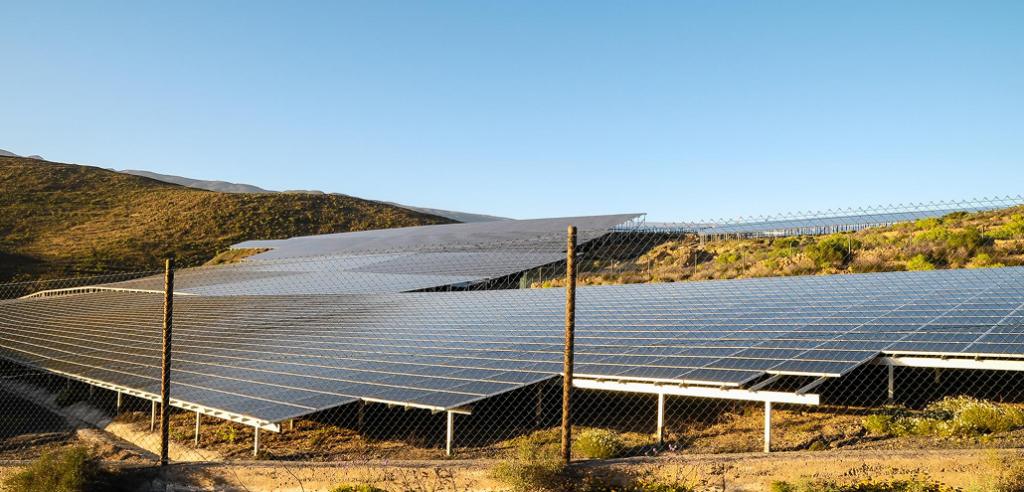
At utility scale, the picture changes. Single-axis trackers now command over 85% of Germany’s utility-scale tracker market, and roughly 70% of Spain’s 9.4 GW 2024 utility-scale build was deployed on single-axis trackers. Whether a tracker makes sense for a specific project depends on scale, location, irradiance, and the financial case behind it.
This guide breaks down both technologies honestly. We’ll cover what each system is, where the energy yield difference comes from, how the costs stack up across a 25-year asset life, what fails on each system and how often, and the project profiles where the tracker conversation actually pays off in European conditions.
Key takeaway
- Fixed tilt is the right choice for residential and commercial ground mount projects across Europe, the vast majority of installs below 1 MW favour the simpler design.
- At utility scale, single-axis tracking now dominates in high-irradiance European markets (Spain, southern Italy, parts of Greece), where the 15–25% yield uplift justifies the higher capital cost.
- Tracking is less attractive in lower-irradiance northern and central Europe, where snow loading, permitting complexity, and cost-of-capital sensitivity moderate adoption.
- Dual-axis tracking remains a niche even in the EU, the additional yield rarely justifies the operational complexity.
- The Nova Ground Mount System uses adjustable fixed tilt from 5° to 60°, engineered to Eurocode standards and built for European wind and snow conditions.
What’s the difference between fixed tilt and tracking ground mount systems?
While fixed tilt and tracking ground mount systems are very similar to one another, there are some differences to highlight for a full understanding of the products.
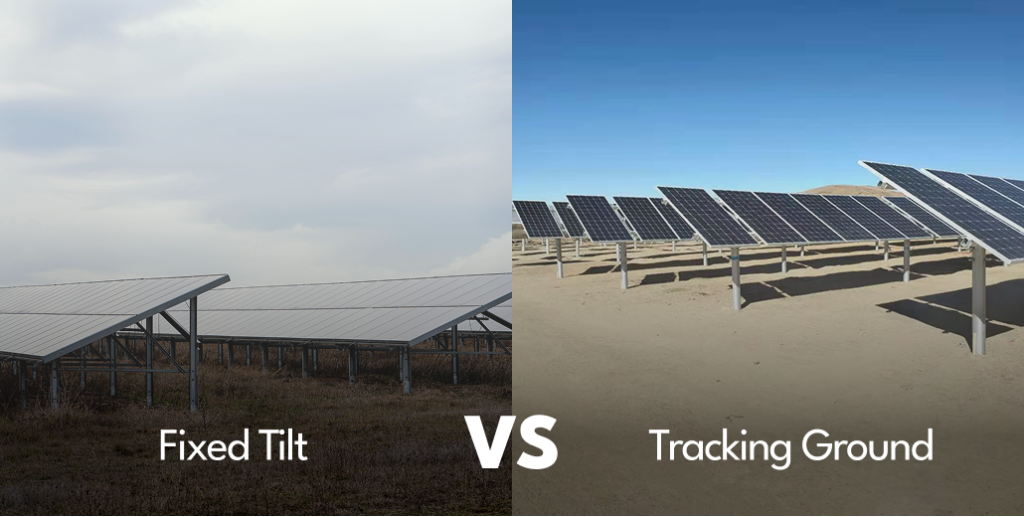
Fixed tilt ground mounts don’t actually move
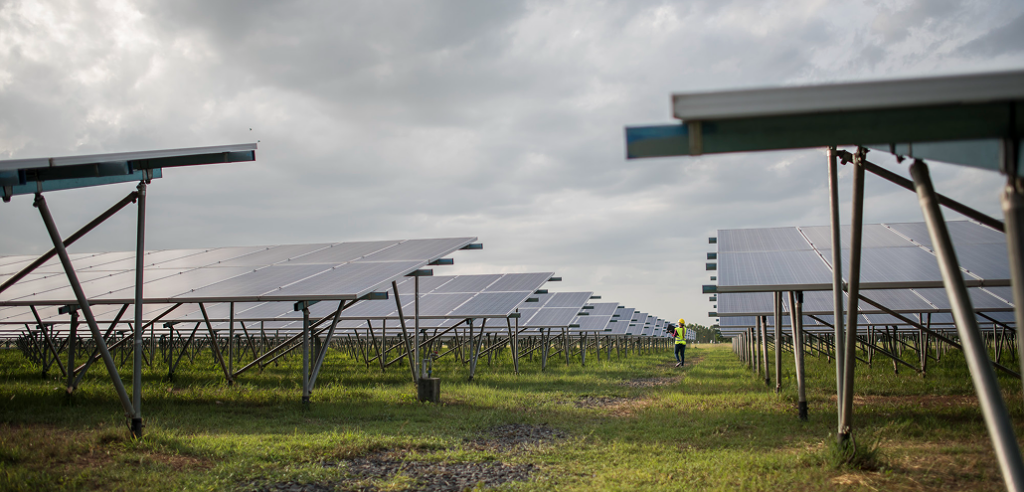
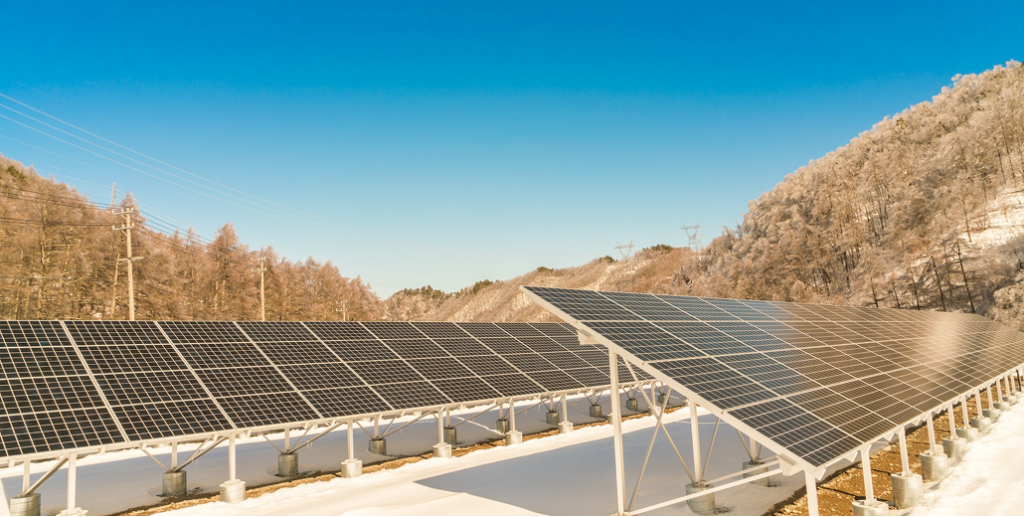
A fixed tilt ground mount holds solar panels at a single angle and orientation for the life of the system. Once installed, the panels don’t move. The angle is chosen to balance summer and winter sun paths at the site’s latitude, typically 30–40° in central and southern Europe and 35–45° in northern Europe and the UK.
A ground mount solar tracking system rotates the panels through the day to follow the sun’s movement. There are two main types:
Tilt for an extra 15–25% energy yield
Single-axis trackers rotate panels around one axis, typically north-south, so the panels face east in the morning and west in the afternoon. They lift energy yield by 15–25% compared to fixed tilt in European irradiance conditions, with the upper end of the range applying in southern Europe where direct normal irradiance is highest.
How rotating on two axes can lift yield by 35%
Dual-axis trackers rotate panels around two axes, following both the daily east-west sun path and the seasonal north-south movement. They lift yield by 25–35% but cost dramatically more and have more failure points.
The technology choice sounds straightforward until you factor in the trade-offs. That extra energy comes at the cost of motors, sensors, controllers, gearboxes, software, and the structural overhead needed to support a moving array. In European conditions, that overhead also includes snow load engineering, which adds another set of failure modes to tracking systems that fixed-tilt designs avoid.
Why fixed tilt wins for residential and commercial European projects
For projects below 1 MW, fixed tilt is the right answer almost everywhere in Europe. Five factors push the calculation strongly in that direction at residential and commercial scale.
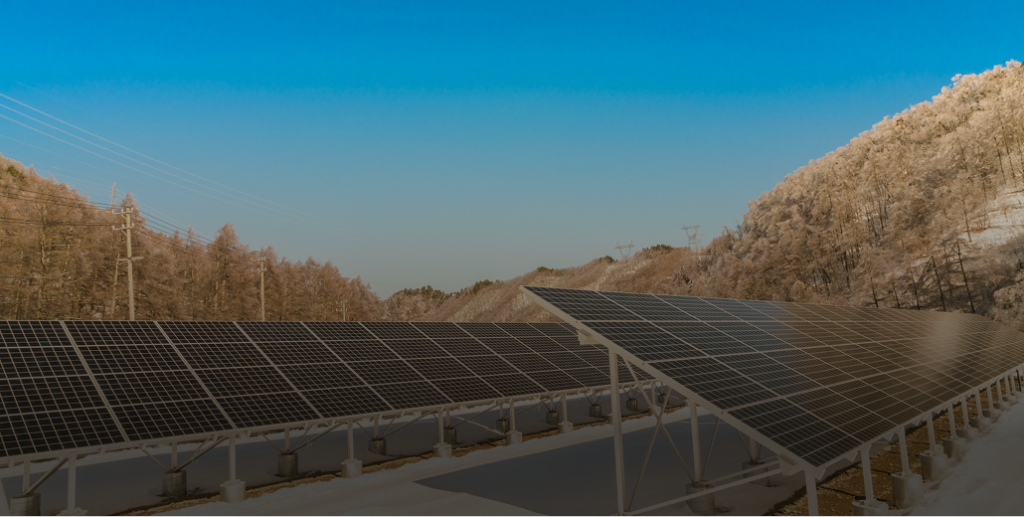
1. Lower upfront cost
A single-axis ground mount solar tracking system carries a 15–25% cost premium over fixed tilt in EU utility-scale markets, equivalent to roughly USD $0,08–$0,12 per watt-DC according to IRENA’s 2025 utility-scale cost data. At commercial scale, where economies of scale on tracker hardware don’t apply, that premium is significantly higher. Dual-axis systems run 50–80% more than fixed tilt.
The cost premium isn’t just the tracker hardware itself. Trackers need stronger foundations to handle the dynamic loads of a moving structure, more sophisticated electrical work, motor and controller integration, and additional engineering certification under Eurocode wind and snow standards. Each of those line items adds cost that fixed tilt doesn’t carry.
2. Zero moving parts means zero motor failures
Fixed tilt systems have no motors, no controllers, no gearboxes, and no sensors. There’s nothing to fail mechanically. The only maintenance required is occasional panel cleaning and visual inspection of structural fixings.
Trackers have all of those components, and every one of them is a failure point. Motors burn out. Controllers fail. Sensors get fouled. Gearboxes wear. Slew drives stiffen up. None of those failures are catastrophic on their own, but they all require service calls, parts, and downtime.
3. Lower lifetime maintenance costs
Tracker maintenance involves regular motor and actuator inspections, lubrication of moving components, sensor recalibration, controller upgrades, motor replacements (typically every 8–12 years), and inevitable warranty claims. Fixed tilt systems require essentially none of this. Independent industry O&M data shows tracker O&M is meaningfully higher per watt than fixed-tilt over a 25-year operating life, with the gap widening once unscheduled repairs and component replacements are factored in.
For installers quoting commercial clients, this matters because business owners are increasingly asking about total cost of ownership, not just upfront install cost. A tracker that wins on year-one numbers can lose badly on 25-year economics, particularly at sub-utility scale where tracker O&M overhead isn’t spread across enough megawatts.
4. Simpler installation and faster project timelines
A fixed tilt ground mount install is mechanically straightforward. Foundations, uprights, rear braces, rails, modules, electrical work. The Nova Ground Mount System reduces this further with pre-fabricated holes for tilt adjustment, single-bolt rail clamps, and module clamps with integrated earthing pins.
A tracker install adds motor mounting, controller integration, sensor calibration, software commissioning, and a much more complex electrical scope. For installers, this usually means 30–50% more on-site time per kilowatt, plus specialised crew skills. Permitting also takes longer: the French Energy Regulatory Commission reports tracker permits averaged 22 months in 2024 compared to 14 months for fixed systems, due to additional shadow flicker and wildlife disturbance studies required for moving-array projects.
5. Better failure resilience in European conditions
European wind regions are governed by Eurocode EN 1991-1-4, with snow loading under EN 1991-1-3. Fixed tilt systems handle wind events through structural strength alone. Trackers have to either lock into a stow position or actively control the array during high winds, and the failure modes when that goes wrong can be severe.
Snow loading is the other failure mode that hits trackers harder than fixed tilt. Snow accumulating on a horizontally stowed tracker can exceed structural capacity in alpine and northern European zones. Fixed-tilt arrays at steeper angles shed snow more naturally. For commercial projects in higher-wind or higher-snow regions, our guide to the best solar ground mount system for European conditions covers the structural and material specifications that matter most.
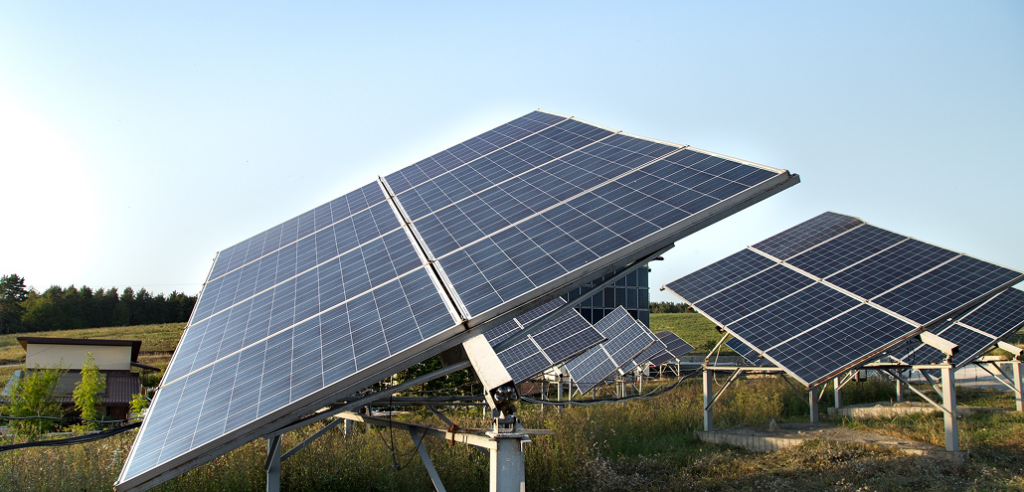
Nova’s field notes: the dynamic load problem trackers create
In our experience working with installers across European markets, the issue we see most often misunderstood about trackers is dynamic loading. A fixed tilt structure is engineered for static loads (gravity, dead load, snow) plus aerodynamic loads (wind on a stationary surface). The numbers are predictable and the engineering is mature.
A tracker, even a single-axis tracker, creates dynamic loads. The structure changes geometry through the day. The aerodynamic profile changes. Wind loads vary by position. Stowing the tracker in high winds helps, but only if the stow command actually executes when it needs to, and only if the stowed position can also handle snow load in alpine and northern European conditions. Get the structural engineering right or don’t quote the project. There’s no middle ground here.
When does a ground mount solar tracking system actually make sense?
For all the reasons fixed tilt wins at smaller scales, there are genuine European scenarios where tracking justifies its cost. These are utility-scale scenarios for the most part, and they’re concentrated in specific markets.
Utility-scale projects above 1 MW in high-irradiance markets
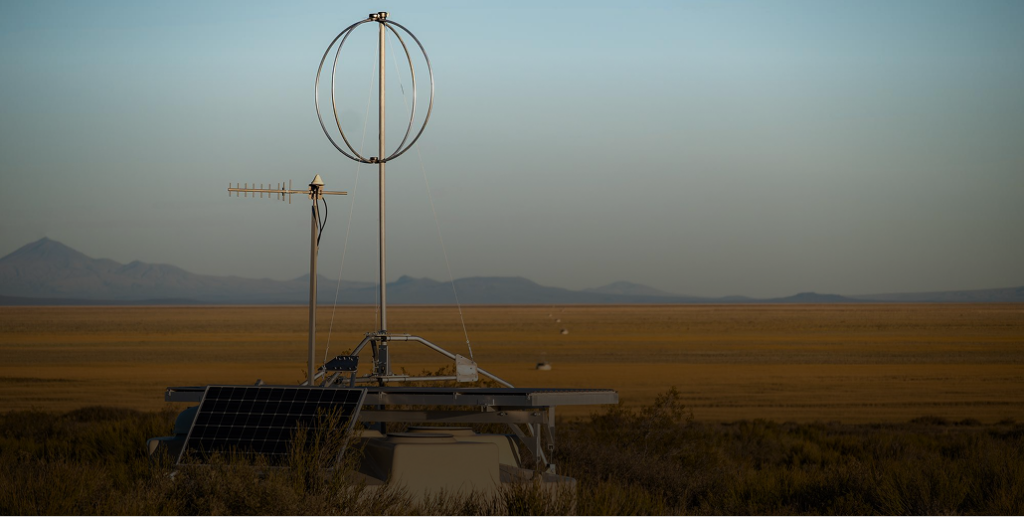
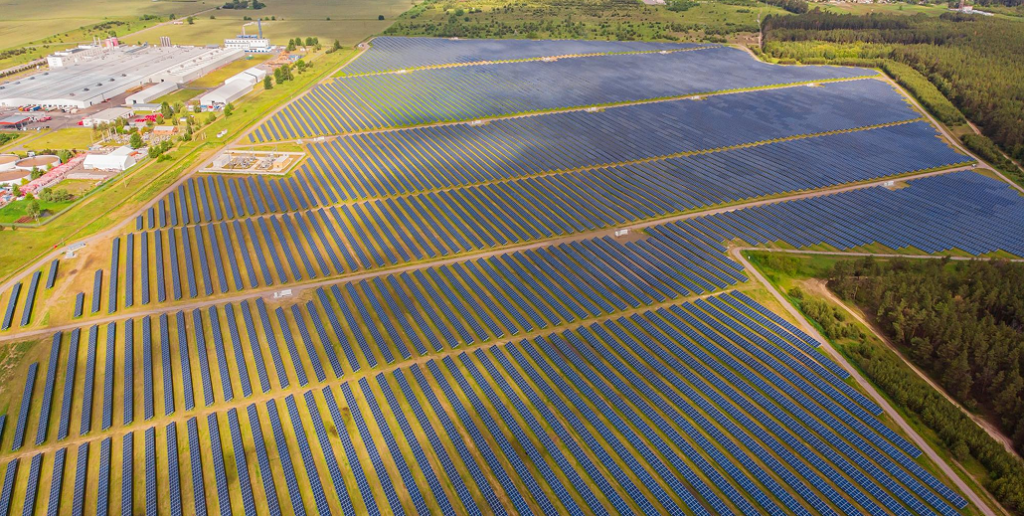
Once a project crosses roughly 1 MW, the per-kilowatt cost of a single-axis tracking system starts to compete with fixed tilt. At 5 MW and above, the economics often favour tracking in southern European markets. This is why Spain deployed single-axis trackers on roughly 70% of its 9.4 GW 2024 build, leveraging flat terrain and high irradiation to maximise the tracker yield uplift.
In Germany, single-axis trackers are now deployed primarily in large ground-mounted solar farms exceeding 10 MW, where land constraints and bifacial module economics justify the hardware premium. Below 10 MW in Germany, fixed tilt remains common because the marginal yield improvement doesn’t always cover the additional capital and operational complexity.
Land-constrained sites
When site footprint is limited but energy demand is high, tracking can squeeze more production from the same land area. This is particularly relevant in Western Europe where utility-scale solar increasingly competes with other land uses, and where agrivoltaic projects are growing rapidly across Germany, France, and Spain.
When tracking probably doesn’t make sense
Residential ground mount, almost always. Commercial projects below 1 MW, almost always. Sites in high-snow alpine zones, almost always. Polish and Romanian developers keep tracker penetration below 30% as they seek to minimise debt service costs, in lower-irradiance markets, the simpler economics of fixed tilt often win out. Northern European markets with shorter winter daylight similarly favour fixed tilt because the tracker yield uplift is smaller when the sun doesn’t track far east-west of solar noon.
Worked example: 5 MW utility-scale ground mount, fixed tilt vs tracking
To make the comparison concrete, here’s what the numbers look like for a 5 MW utility-scale ground mount in Europe. We’ve used 5 MW because that’s where the tracker decision actually happens for most European utility-scale developers, below this scale, fixed tilt dominates. The figures below are anchored to IRENA’s verified European utility-scale TIC benchmark of USD $779/kW for 2024, IndexBox German tracker market data, and real-world O&M data from utility-scale operators. Yield estimates cover both German and Spanish irradiance conditions to show how location changes the LCOE outcome.
| Metric | Fixed tilt | Single-axis tracking |
|---|---|---|
| Installed cost (EUR) | €3.600.000 | €4.150.000–€4.500.000 |
| Annual energy yield (MWh) — Germany | ~5.500 | ~6.700 |
| Annual energy yield (MWh) — Spain | ~8.500 | ~10.400 |
| Annual O&M cost (preventive + reactive) | ~€55.000 | ~€75.000–€100.000 |
| Major component replacement (motors, controllers) over 25 years | None | €300.000–€600.000 |
| Permitting timeline (France benchmark) | ~14 months | ~22 months |
| LCOE outcome at 5 MW scale | Competitive in northern/central EU | Often lowest LCOE in high-irradiance markets (Spain, Italy) |
Three things stand out from this table. First, the LCOE outcome depends heavily on location. In German irradiance conditions, fixed tilt and single-axis tracking deliver broadly competitive LCOE at 5 MW, the tracker’s yield advantage is offset by higher capital cost, O&M, and component replacement. In Spanish conditions, the tracker yield uplift is significantly more valuable, and single-axis tracking typically wins on LCOE. Second, the win isn’t automatic even in high-irradiance markets. Real-world O&M reporting shows tracker maintenance costs sit higher than fixed-tilt, and major component replacement over 25 years can run €300.000–€600.000 per 5 MW. That’s a real cost that doesn’t appear in year-one capital comparisons. Third, permitting complexity adds 8 months on average to tracker timelines in France, a real cost in project IRR calculations.
Dual-axis tracking has been excluded from this table because it almost never makes financial sense in European utility-scale contexts. The incremental yield over single-axis (typically 5–10%) doesn’t justify the dramatically higher capital cost, more complex foundations, and added failure modes.
For a detailed pricing breakdown across smaller commercial system sizes, see our guide to commercial ground mount solar cost for installers.
What makes a good fixed tilt ground mount system?
For the vast majority of European ground mount projects, fixed tilt is the right answer. Five features separate quality fixed-tilt systems from cheaper alternatives.
Adjustable tilt angle range
Europe spans from latitude 35° in southern Spain and Italy to 65° in northern Scandinavia. The optimal panel tilt varies significantly across that range, from around 30° in southern Europe to 45° or steeper in northern markets. A ground mount system that supports a wide tilt range gives installers the flexibility to optimise for any site without changing products. The Nova Ground Mount System supports 5° to 60° adjustable tilt, which covers every European latitude with room for site-specific optimisation.
Foundation flexibility
European soil conditions vary enormously, dense clay across much of central Europe, sandy soils across northern Germany and the Baltic states, rocky terrain in the Alps and Mediterranean coasts, and peat or alluvial soils in low-lying areas. A ground mount system that supports both ground screw and concrete ballast foundations lets installers quote across more sites without changing suppliers.
Corrosion-resistant materials
European coastal markets (North Sea, Atlantic Europe, Mediterranean) accelerate corrosion of standard galvanised steel. Zinc Aluminium Magnesium (ZAM) coated steel offers significantly better corrosion resistance and is the preferred specification for most European ground mount projects, particularly in salt-laden or high-humidity environments.
Fast installation hardware
Pre-fabricated holes, single-bolt rail clamps, module clamps with integrated earthing pins, and minimised component count all reduce on-site time. Labour rates vary significantly across European markets, but system efficiency improvements compound regardless of local labour costs, an install that takes a day instead of two days improves project margin in Germany as much as in Poland.
Snow load rating
Unlike Australian or New Zealand systems, European ground mount installations almost always need to handle significant snow loads. Central and northern European sites can see characteristic snow loads exceeding 2 kN/m², and alpine sites can exceed 4 kN/m². A racking system rated for European snow loads under EN 1991-1-3 is non-negotiable for these markets.
Nova’s field notes: tilt optimisation matters more than installers think
Most installers default to a “standard” tilt of around 30–35° for residential ground mount projects regardless of location. That’s fine in central Europe, but it leaves yield on the table in northern Europe (parts of Sweden, Norway, Scotland) where 40° or steeper would optimise the annual production curve, and it can be sub-optimal in southern Europe (Andalusia, Sicily) where slightly lower angles better match the higher solar elevation.
When we work with installers on commercial quotes, we always recommend running the site through a quick irradiance modelling tool (PVsyst, Helioscope, or the free PVGIS tool from the European Commission’s Joint Research Centre) to confirm the optimal tilt before locking in the structure design. A 5° adjustment based on site-specific modelling can add 1–2% annual yield, which compounds significantly over 25 years.
Build smarter ground mount projects with Nova
At Nova, we’ve spent more than 15 years designing solar mounting systems that make installers’ lives easier and customers’ projects more reliable. The Nova Ground Mount System is built around our “less is more” philosophy: fewer components, single-bolt rail clamps, integrated earthing pins, and pre-fabricated holes for tilt adjustment from 5° to 60°. It supports both ground screw and concrete ballast foundations, comes in Zinc Aluminium Magnesium coated steel for superior corrosion resistance, and installs up to 30% faster than traditional ground mount systems. It’s backed by a 25-year warranty and supported by a technical team that works with you from soil report to commissioning.
Whether you’re quoting a 5 kW residential ground mount or scoping a 500 kW commercial array, speak to the Nova technical team for project-specific support, or explore the NOVA Ground Mount System specifications in detail.
Frequently asked questions
Can I retrofit a fixed tilt ground mount with tracking later?
Generally no. The structural foundations, electrical infrastructure, and panel mounting hardware are fundamentally different between fixed tilt and tracking systems. A retrofit usually means rebuilding the array from the ground up, which costs more than installing tracking from scratch. If there’s any realistic chance of moving to tracking later, design for it from day one. In practice, this almost never makes sense for projects below utility scale.
Do tracking systems work well in alpine and northern European conditions?
Tracking is less attractive in markets with significant snow load and shorter winter daylight. Snow accumulating on a horizontally stowed tracker can exceed structural capacity in alpine zones, and the tracker yield uplift is smaller when the sun doesn’t track far east-west of solar noon (a winter reality across much of northern Europe). Most utility-scale projects in northern Scandinavia, Scotland, and alpine regions use fixed tilt for these reasons. Southern European markets with high irradiance and minimal snow load are where tracking dominates.
How long do tracking system motors typically last?
Tracker motors and slew drives are typically rated for 15–20 years of operation, but real-world replacement intervals depend heavily on use cycles, environmental exposure, and maintenance quality. Many tracker installations see motor replacements at 8–12 years, controller replacements at 10–15 years, and various sensor and electronic component replacements throughout the system life. These replacements aren’t catastrophic, but they’re predictable costs that fixed tilt systems don’t incur.
What’s the difference between single-axis and dual-axis tracking?
Single-axis trackers rotate around one axis, usually north-south, so panels follow the sun’s daily east-west path. They typically add 15–25% yield over fixed tilt. Dual-axis trackers rotate around two axes, so panels also follow the seasonal north-south movement of the sun. They add another 5–10% yield over single-axis (so 25–35% over fixed tilt), but cost dramatically more and have more components that can fail. Single-axis is the dominant choice in European utility-scale projects, with over 85% market share of the German tracker market versus 5–8% for dual-axis.
Does Nova offer a tracking system?
No. The Nova Ground Mount System is a fixed-tilt design with adjustable angles from 5° to 60°. We focus on fixed tilt because it’s the right answer for the vast majority of European ground mount projects, particularly at residential and commercial scale, and because our “less is more” product philosophy is built around reliability, fast installation, and minimal failure points. For utility-scale projects in high-irradiance markets where single-axis tracking is genuinely the right choice, we recommend working with a specialist tracker manufacturer.