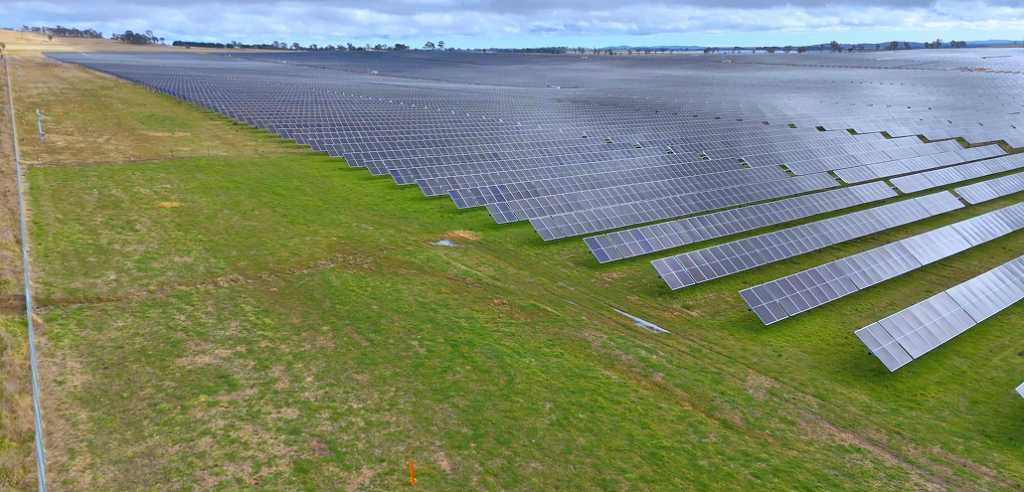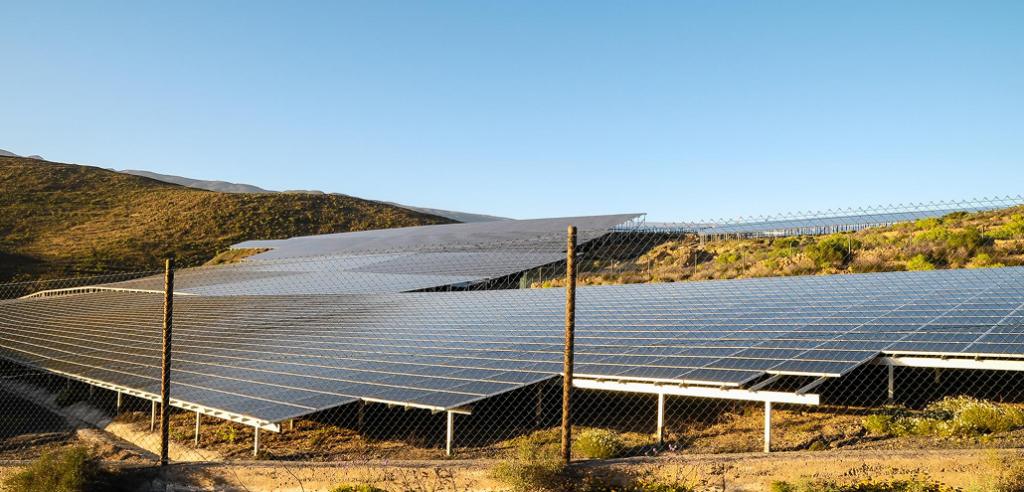
The solar carport system cost in Europe in 2026 is EUR €1,80 to €2,80 per watt installed, with commercial projects at scale dropping as low as €1,60 per watt. That puts a 1-car residential carport at €7.500–€13.000, a 2-car at €13.000–€22.000, and a 100 kW commercial system at €175.000–€260.000.
Those ranges are wider than most installers would like, because the final number depends on seven factors that sit outside the solar hardware itself: the structure, foundations, material choice, labour, waterproofing, snow loading, and the site’s wind region. Get those right and a carport is a 25-year asset. Get them wrong and you’re rebuilding within a decade.
This guide breaks down solar carport system cost across residential and commercial projects, shows where the money goes, explains how country-specific incentives change the equation, and gives you a quoting framework you can reuse on every project.
![NOVA ZERO Railing Carport System installation with vehicle parked underneath, showing integrated guttering]](https://novamounting.com/wp-content/uploads/2026/05/Rectangle-40186-2-1024x492.png)
Key takeaway: the 5-step framework for quoting a solar carport
- Size the system. Residential 3–4 kW (1-car) or 6–6.6 kW (2-car); commercial 30 kW to 500 kW+ depending on available parking footprint.
- Pick the benchmark per-watt rate. €2,20–€2,80 residential, €1,80–€2,20 commercial up to 100 kW, €1,60–€1,80 for 500 kW+.
- Check the wind and snow regions. Eurocode EN 1991-1-4 for wind, EN 1991-1-3 for snow. Add 15–30% in high-wind coastal regions and high-altitude or northern European sites with significant snow loads.
- Factor in the site. Concrete footings (standard), ground screws (commercial with suitable soil, common across Europe), or difficult ground (geotechnical survey required, +10–20%).
- Apply country-specific incentives. Germany’s KfW loans and EEG framework, France’s MaPrimeRénov’, Italy’s Superbonus, and Spain’s regional rebates all change the financial picture. Always confirm current local programmes at quoting stage.
A solar carport costs €1,80–€2,80 per watt installed in Europe
This is the headline number for 2026. European solar carport systems install at €1,80–€2,80 per watt all-in. For context, a standard rooftop solar install in Germany runs around €1,00–€1,40 per watt for residential and €0,70–€0,90 per watt for commercial. Carports cost roughly two to three times more per watt because you’re paying for the entire structure as well as the solar hardware.
European pricing varies more than AU or NZ markets due to country-specific labour rates, VAT differences, and import logistics. Germany typically sits in the middle of the range; France, Italy, and Spain trend slightly cheaper for materials but with longer permitting timelines; Sweden, Poland, and Lithuania face higher logistics costs but lower labour rates.
| System type | Typical size | Installed cost (AUD) |
| Residential 1-car carport | 3–4 kW | €7.500 – €13.000 |
| Residential 2-car carport | 6–6.6 kW | €13.000 – €22.000 |
| Small commercial carport | 30–50 kW | €60.000 – €115.000 |
| Mid-scale commercial | 100–200 kW | €60.000 – €115.000 |
| Large commercial | 500 kW+ | €850.000+ |
These figures assume standard site conditions, Eurocode-compliant structural engineering, and a quality modular mounting system. High-snow regions, exposed coastal sites, and difficult ground push costs higher.
Why carports cost more per watt than rooftop systems
Rooftop installs clamp rails to an existing structure. A carport is the structure. You’re paying for framing, concrete foundations, engineering sign-off, and a bigger labour component because the crew builds from the ground up.
The upside: carports often produce more usable power per panel because the tilt is set to optimum, they sit on otherwise-dead parking footprint, and they pair naturally with EV charging, increasingly important across Europe as EV mandates accelerate. For commercial sites, the visibility is a marketing asset every staff member and customer sees daily.
Residential solar carports run €7.500 to €22.000 installed
Residential solar carports are typically chosen when the roof isn’t suitable for solar, when a carport is being built anyway, or when the homeowner wants covered EV charging fed by their own generation.
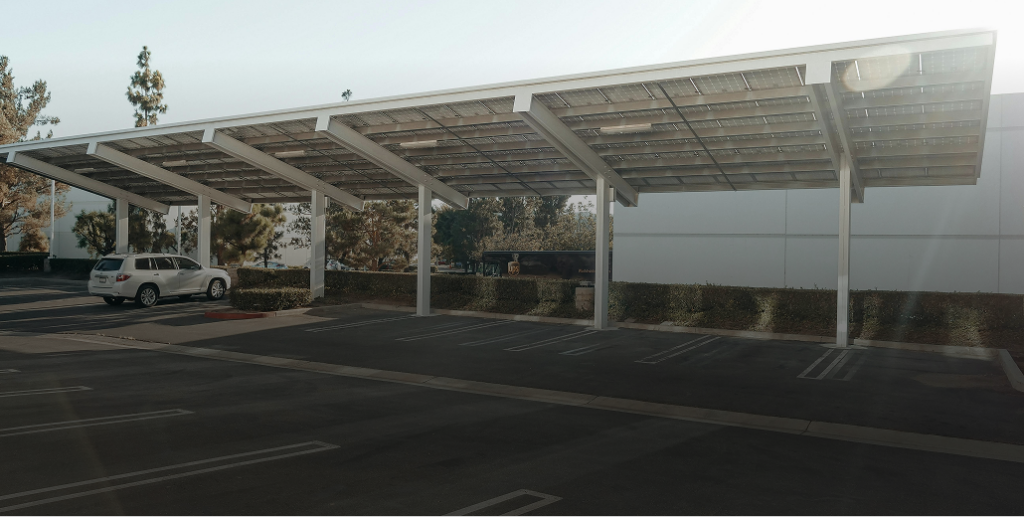
1-car residential carports cost €7.500–€13.000
A 1-car carport fits around 9 panels and generates 3–4 kW. Installed cost sits at €7.500–€13.000 depending on materials, site access, and panel tier. Structural and fixed costs dominate at this size, which is why 1-car installs are the most expensive carports per watt.
2-car residential carports cost €13.000–€22.000
A 2-car carport fits around 15 panels and produces 6–6.6 kW. Installed cost runs €13.000–€22.000, with battery storage adding another €4.000–€10.000.
Cost split for a typical 2-car system:
- Structural frame and foundation: 30–40%
- Solar panels: 20–25%
- Inverter: 8–12%
- Mounting system and electrical components: 10–15%
- Labour and installation: 15–20%
- Engineering, permits, and compliance: 3–5%
Nova’s field notes: where residential carport quotes go wrong in Europe
In our experience working with installers across multiple European markets, the two biggest reasons residential carport quotes blow out aren’t materials or labour. They’re permitting and snow load engineering. Permitting timelines vary dramatically across Europe. Germany’s Baugenehmigung process can take weeks to months depending on the Bundesland; France’s déclaration préalable is faster but tightens up in protected zones; Italian permits frequently get caught in regional bureaucracy.
Always check local permitting requirements before quoting and add timeline contingency. For sites with snow load above 1,5 kN/m², get the structural engineer involved early, retrofitting for snow after the fact is expensive and usually requires foundation rework.
Commercial solar carport cost per watt drops to €1,60–€2,20 at scale
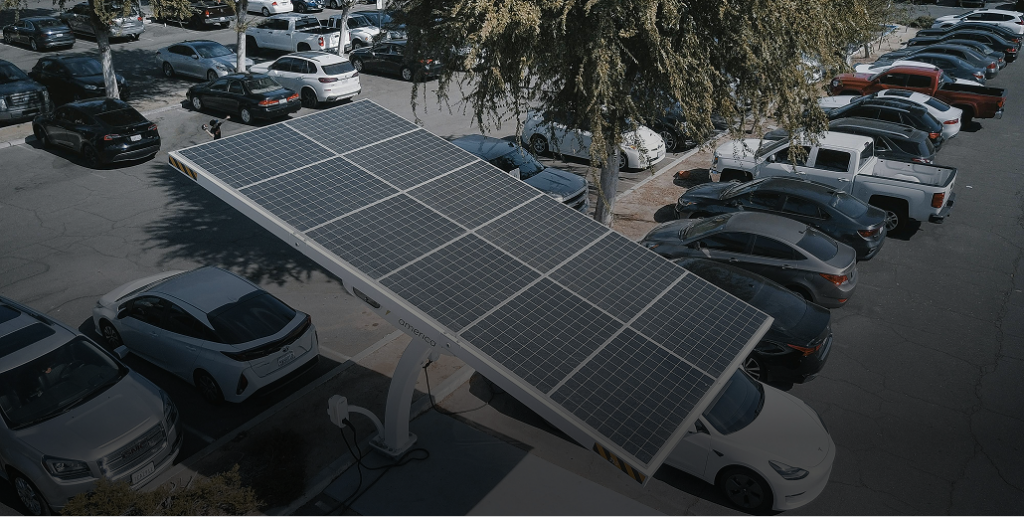
For commercial projects, the numbers improve significantly. Commercial solar carport cost per watt lands at €1,60–€2,20 at scale, and the commercial solar carport cost case strengthens because businesses can claim depreciation, access country-specific incentives, and use solar to meet EU Corporate Sustainability Reporting Directive (CSRD) obligations.
Commercial benchmarks in 2026:
- 30 kW (10–12 bays): €60.000–€85.000
- 100 kW (35–40 bays): €175.000–€260.000
- 250 kW (85–100 bays): €425.000–€625.000
- 500 kW+: €850.000+, often below €1,60 per watt at this scale
Per-watt cost falls as project size grows
Fixed costs like engineering, grid connection, and site mobilisation spread across more kilowatts as projects scale. A 500 kW install typically comes in 15–25% cheaper per watt than a 50 kW install on the same type of site.
Grouping panels under one engineered structure beats fragmenting into multiple smaller carports. Three separate 10 kW carports cost significantly more than a single 30 kW carport covering the same footprint, because you pay for foundations, engineering, and mobilisation three times instead of once.
Commercial payback lands at 5–8 years across most European markets
Commercial solar carports typically pay back in 5–8 years across European markets, though the figures vary by country. Germany sees 6–8 year payback driven by industrial electricity rates around €0,20–€0,30/kWh and KfW financing access. France lands at 5–7 years thanks to lower upfront cost and self-consumption tariff structures. Italy can achieve 4–6 year payback where Superbonus or regional incentives apply. Spain typically runs 5–7 years.
For a deeper look at what happens between sign-off and commissioning, our guide to solar carport installation costs covers the site and project factors that affect timeline and risk.
Seven factors drive the final solar carport system cost
The €1,80–€2,80 per-watt range is wide because seven factors account for most of the variation between European quotes, one more than AU/NZ markets, because of snow loading.
1. Structural design and materials drive 30–40% of total cost
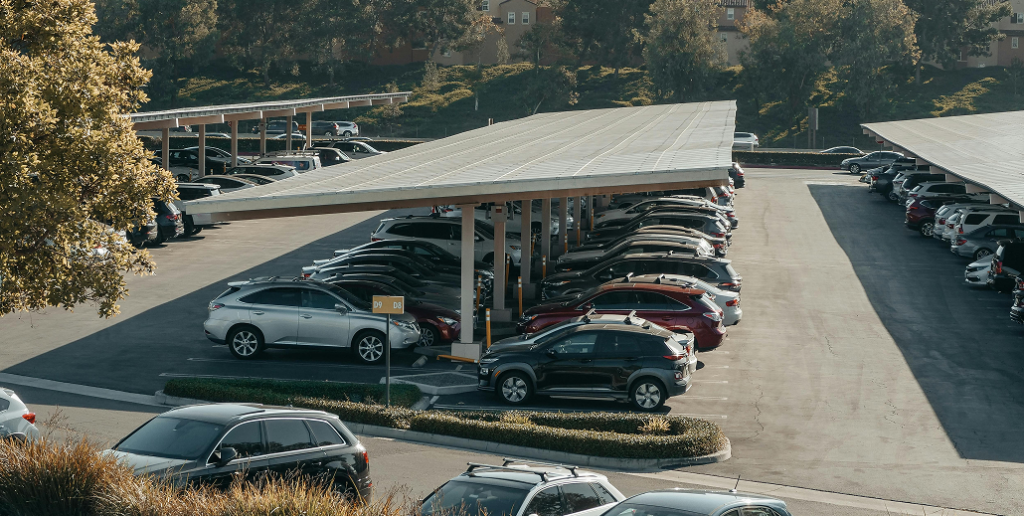
The frame is the biggest cost component after the panels, which is why solar carport structures cost varies so much between quotes for similar-sized systems.
Aluminium 6005-T5 resists corrosion naturally, weighs less, and assembles faster than steel. Zinc aluminium magnesium (ZAM) coated steel outperforms traditional hot-dip galvanised steel in humid and coastal conditions. Standard hot-dip galvanised steel is cheapest upfront but typically begins micro-corroding before the 25-year mark in humid coastal climates (the North Sea coast, the Mediterranean basin, Atlantic France and Spain). For these regions, the premium for better materials generally pays back within the first decade.
2. System size and number of bays change per-watt economics
Bigger is cheaper per watt. A 2-car carport is cheaper per watt than a 1-car carport, and a 30-bay commercial install is cheaper per watt again. If site and budget allow, sizing up is almost always better value.
3. Foundations and site conditions can add 10–30% to the bill
Concrete footings are the European default for difficult ground. Ground screws are widely used across Europe, particularly in Germany, the Netherlands, and Scandinavia, where soil conditions and engineering culture support them. Rocky ground, sloped sites, high water tables, and frost depth requirements all push foundation cost up. In northern European markets, foundations must be designed below the local frost line, which can mean significantly deeper footings than in southern Europe.
4. Snow loading is the major European-specific cost driver
This is the factor that changes European carport engineering most compared to AU or NZ. Under Eurocode EN 1991-1-3, structures across most of central, northern, and eastern Europe must be engineered to handle significant snow loads. Typical characteristic snow loads range from below 0,5 kN/m² in coastal Mediterranean regions to over 4 kN/m² in alpine and northern Scandinavian zones.
Carports in high-snow regions need stronger structural members, deeper foundations, and often steeper tilt angles to shed snow. Budget an additional 15–25% on structural cost for sites with characteristic snow loads above 2 kN/m², and up to 40% more in alpine zones.
5. Wind region adds 15–30% in exposed sites
Wind loading under Eurocode EN 1991-1-4 determines structural sizing. Most metropolitan European sites are in moderate wind zones, but coastal regions (the North Sea, Atlantic Europe), elevated sites, and exposed terrain require significantly stronger engineering. Budget an extra 15–30% for foundations and structural work in higher wind zones.
6. Waterproofing adds 10–15% but avoids expensive retrofits
A basic solar carport gives shade. A waterproof one keeps people and vehicles genuinely dry, which matters across most European climates where annual rainfall is high and consistent. Integrated gutter systems add 10–15% to component cost and eliminate the most common post-install complaint: water dripping through panel gaps onto cars below.
At Nova, we integrate the water gutter channel directly into the rail through our NOVA ZERO Railing System, removing the need for separate gutter components and cutting an entire install step.
7. Installation labour varies by country
Labour is where the biggest cost variability lives across Europe. A well-engineered system with pre-assembled supports, pre-labelled purlins, and clamp-based rail connections installs up to 30% faster than a traditional carport requiring on-site fabrication and drilling.
Labour rates vary enormously across Europe. Germany, France, and the Nordics command higher rates; Poland, Lithuania, Romania, and southern Italy run lower. For a 2-car residential carport, the labour difference between Germany and Poland can be 30–50% on the same nominal scope. For installer margin, system efficiency is usually the single biggest lever regardless of market.
Nova’s field notes: never quote a ballasted carport without a structural report
Never quote a ballasted commercial carport, or a rooftop ballast system, without a structural engineer’s report confirming the ground or roof can take the load. Ballasted systems carry significant distributed weight, and older European industrial buildings, unreinforced slabs, and sites with fill under the parking area can fail that load test.
In high-snow regions, this is doubly important, as dead load and snow load can exceed structural capacity even when each individually is acceptable. Get the structural sign-off before you put a number on paper. Losing a day to engineering is cheap. Demobilising a crew because the site can’t take the load is expensive and reputationally brutal.
European incentives change the financial picture significantly
Unlike Australia’s single STC scheme, Europe has no unified rebate. Each country runs its own programme, and the financial impact varies dramatically.
Germany offers the most established framework. The KfW Bank provides low-interest renewable energy loans that cover both residential and commercial solar carports. The EEG (Erneuerbare-Energien-Gesetz) framework guarantees feed-in tariffs for surplus generation. Combined, these significantly reduce effective system cost over the operating life.
France runs MaPrimeRénov for residential energy upgrades, plus self-consumption premium tariffs that improve commercial economics.
Italy has historically offered some of Europe’s most generous incentives through Superbonus, ecobonus, and detrazioni fiscali, though programme structures change frequently; confirm current eligibility at quoting stage.
Spain offers regional rebates and self-consumption tax reductions; programmes vary significantly between Comunidades Autónomas.
Netherlands and Belgium offer Salderingsregeling (net metering) and SDE++ subsidies for larger commercial installations.
Eastern European markets (Poland, Lithuania, Romania, Croatia) run a mix of national programmes with significant EU funding contributions, often targeted at commercial and industrial scale.
VAT treatment also matters. Several EU countries have reduced or zero-rated VAT on residential solar PV under the EU VAT Directive amendments, which can reduce headline cost by 5–20% depending on jurisdiction.
Smart design choices cut solar carport costs without cutting corners
The gap between an economical solar carport and a cheap one that fails in five years almost always comes down to the mounting system and the design. Both are within the installer’s control.
- Choose modular, pre-engineered systems over custom fabrication. Custom structures cost more at every stage: engineering, manufacturing, transport, and assembly.
- Match materials to the environment. Aluminium 6005-T5 and ZAM-coated steel last the distance in European conditions. Standard galvanised steel underperforms in coastal and high-humidity zones.
- Engineer for snow load from day one. Retrofitting structural capacity is expensive and usually requires foundation rework.
- Size up where the site allows. One 30 kW install beats three 10 kW installs for the same total capacity.
- Integrate waterproofing from day one. Retrofitting gutters is expensive and often imperfect.
- Use project planning tools early. Talk to our team of professionals early in your project to get the support you need to plan your project correctly. We can produce a complete materials breakdown in minutes, cutting quoting time and removing guesswork.
- Pick a system backed by engineering support. On-site problem-solving is the silent cost killer.
If you’re weighing up structural approaches before quoting, our overview of quality solar carport designs walks through which configurations suit residential, commercial, and mixed-use sites.
A solar carport is worth the investment when the numbers stack up
Residential payback: 8–12 years
A 6.6 kW 2-car residential carport installed for €18.000 (mid-range, Germany) typically saves a household with 50% self-consumption around €1.400–€1.800 per year at €0,32/kWh grid rate. That’s a 10–13 year payback before accounting for KfW interest savings, property value uplift, and the utility of covered parking and EV charging. Net savings over 25 years typically reach €18.000–€32.000.
Commercial payback: 5–8 years
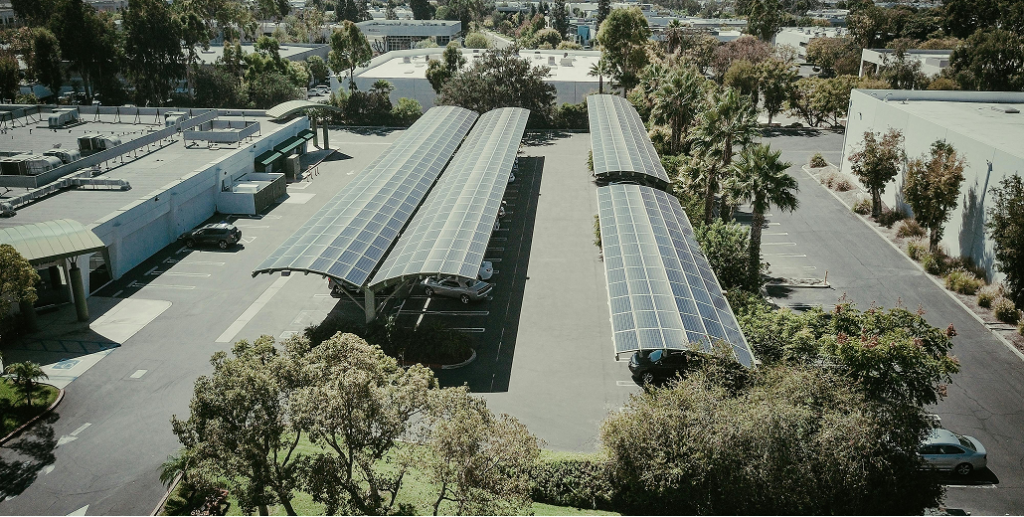
A 100 kW commercial carport installed for €220.000 saves a business with high daytime consumption at €0,25/kWh roughly €25.000–€32.000 per year on electricity. Factor in depreciation, EEG tariff revenue (in Germany), and CSRD reporting value, and effective payback drops to 5–8 years depending on country and tax position.
Frequently Asked Questions (FAQ)
Q: Can I finance a solar carport in Europe?
A: Yes, options vary by country. Germany’s KfW Bank offers some of the most attractive renewable energy loans in Europe, with rates often below 3%. Most major European banks now offer green loan products for residential solar. Commercial projects across Europe can access solar PPAs, equipment finance, and operating leases. PPAs are particularly common in Germany, France, the Netherlands, and Spain.
Q: What tax benefits can European businesses claim on a commercial solar carport?
A: Depreciation rules vary by country, but most EU jurisdictions allow accelerated depreciation on renewable energy assets. Germany permits straight-line depreciation over the system’s useful life with optional bonus depreciation under certain programmes. France allows déduction exceptionnelle for qualifying installations. Italy’s Superbonus has historically provided enhanced depreciation, though structures change. Confirm current eligibility with a local accountant.
Q: Do I need different engineering for a carport in northern vs southern Europe?
A: Yes. Snow load engineering under EN 1991-1-3 changes significantly across European latitudes and altitudes. A carport designed for southern Spain will fail under Bavarian or Polish winter snow loads. Always engineer to the local characteristic snow load and don’t assume a “standard” European design works everywhere.
Q: Are solar carports cheaper than ground-mounted solar in Europe?
A: It depends on the site. Ground mount is usually cheaper per watt because the structure is simpler and foundations are shallower. However, carports use existing parking rather than consuming land, increasingly relevant under EU land use directives, and deliver covered parking and EV charging infrastructure. For commercial sites with parking but limited spare land, a carport is often the only practical option.
Build smarter carport projects with Nova
At Nova, we’ve spent more than 15 years designing solar mounting systems that make installers’ lives easier and commercial customers’ numbers stack up. The NOVA ZERO Railing Carport System is modular, waterproof with integrated guttering built into the rail, made from corrosion-resistant materials engineered for European conditions including snow loads, and installs up to 30% faster than traditional carport structures. It’s backed by a 25-year workmanship warranty and supported by a technical team that works with you from concept to commissioning.Whether you’re quoting a single residential carport or scoping a 500 kW commercial project, speak to the Nova technical team for project-specific support, or explore the NOVA ZERO Railing Carport System specifications in detail.