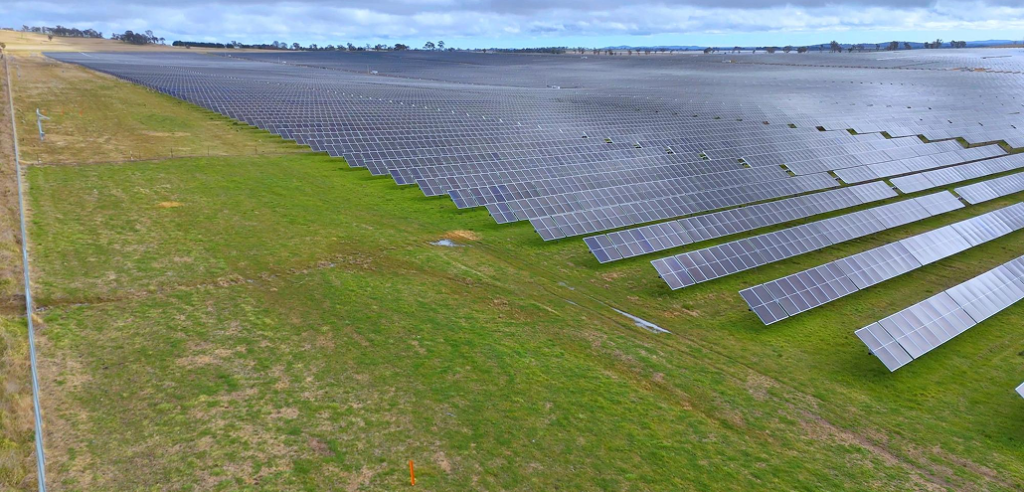
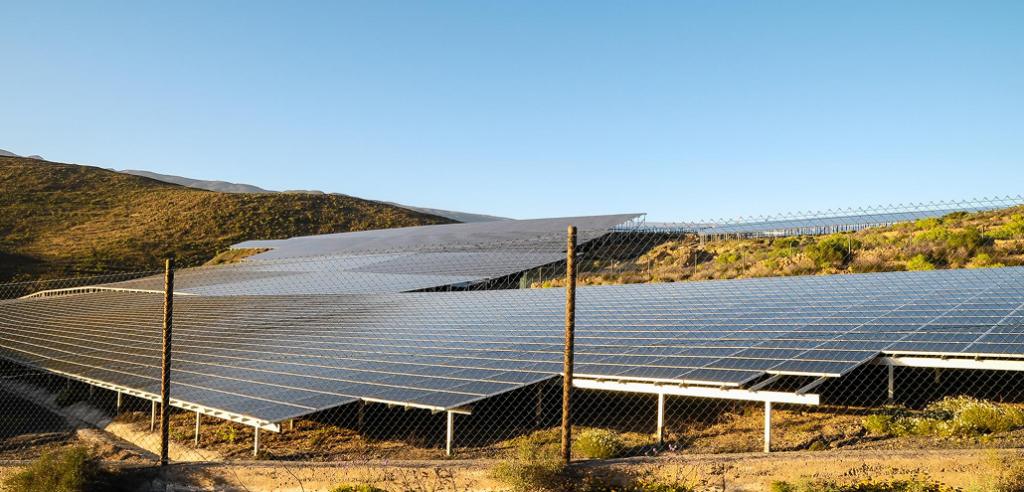
A ground mount solar tracking system can produce 15–35% more energy than a fixed-tilt array of the same size. That sounds compelling until you look at what the tracker actually costs to buy, install, and maintain over 25 years. For 95% of Australian ground mount projects, fixed tilt wins on every metric that matters: lower upfront cost, fewer failure points, simpler maintenance, and faster payback.
But that 5% where tracking does make sense is real. Knowing which side a project falls on is the difference between quoting confidently and getting outbid by a competitor who’s done the maths.
This guide breaks down the two technologies honestly. We’ll cover what each system is, where the energy yield difference actually comes from, how the costs stack up across a 25-year asset life, what fails on each system and how often, and which project profiles justify the move to tracking.
Key takeaway
- Fixed tilt is the right choice for the vast majority of Australian ground mount projects, residential, commercial, and most agricultural installs included.
- Tracking systems produce 15–35% more energy depending on type and latitude, but cost 25–80% more upfront and carry significant ongoing maintenance burden.
- The maths typically only works for tracking on utility-scale projects above 1 MW, or in specific high-irradiance and high-electricity-cost scenarios.
- The Nova Ground Mount System uses adjustable fixed tilt from 5° to 60°, optimised for any Australian latitude and engineered to AS/NZS 1170 standards.
- For installer margin, fixed tilt is also the better quote, simpler scope, fewer failure points, and a faster build.
What’s the difference between fixed tilt and tracking ground mount systems?
While fixed tilt and tracking ground mount systems are very similar to one another, there are some differences to highlight for a full understanding of the products
Fixed tilt ground mounts don’t actually move
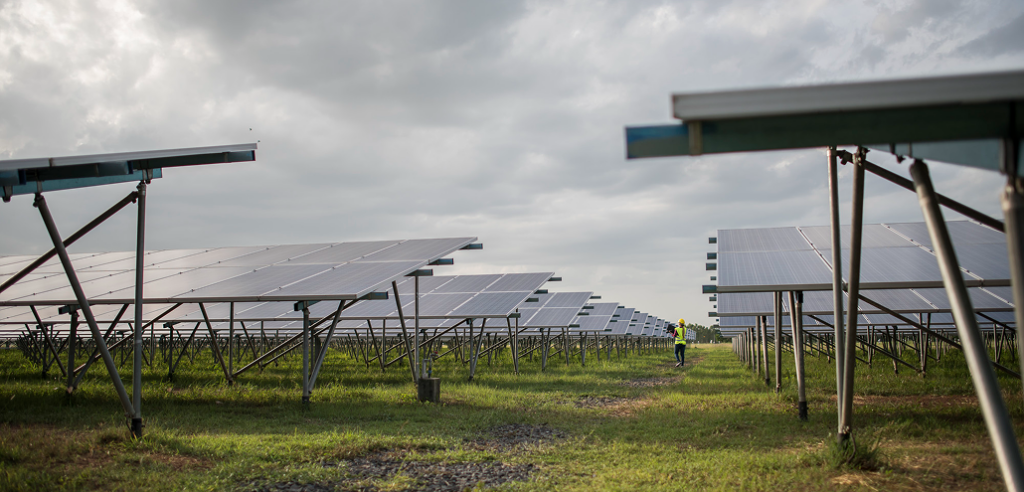
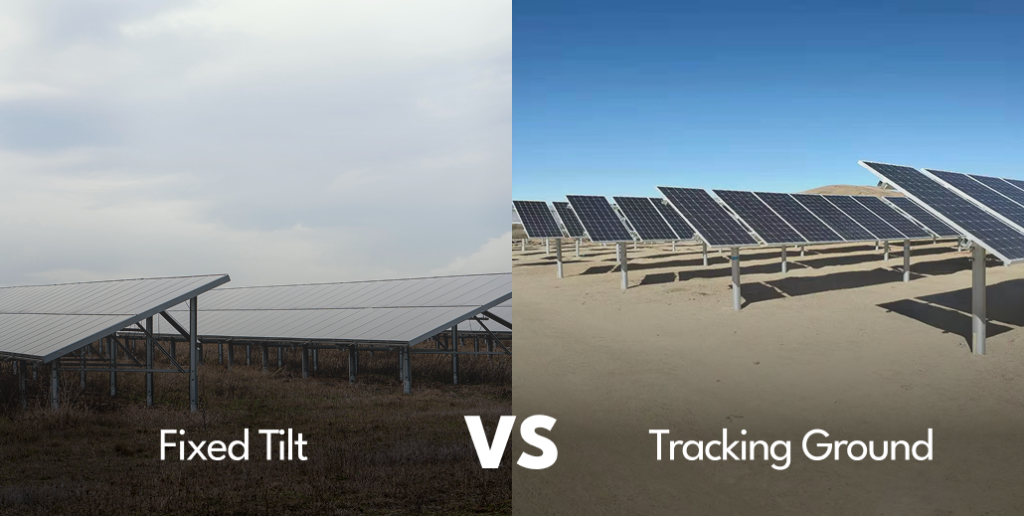
A fixed tilt ground mount holds solar panels at a single angle and orientation for the life of the system. Once installed, the panels don’t move. The angle is chosen to balance summer and winter sun paths at the site’s latitude, typically 25–35° across most of Australia.
A ground mount solar tracking system rotates the panels through the day to follow the sun’s movement. There are two main types:
Tilt for an extra 15-25% energy yield
Single-axis trackers rotate panels around one axis, typically north-south, so the panels face east in the morning and west in the afternoon. They lift energy yield by 15–25% compared to fixed tilt.
How rotating on two axes can lift yield by 35%
Dual-axis trackers rotate panels around two axes, following both the daily east-west sun path and the seasonal north-south movement. They lift yield by 25–35% but cost dramatically more and have more failure points.
The technology choice sounds straightforward until you factor in the trade-offs. That extra energy comes at the cost of motors, sensors, controllers, gearboxes, software, and the structural overhead needed to support a moving array in Australian wind conditions.
Why fixed tilt wins for 95% of Australian ground mount projects
Five factors push the vast majority of Australian projects toward fixed tilt, and they compound across the life of the system.
1. Lower upfront cost by 25–80%
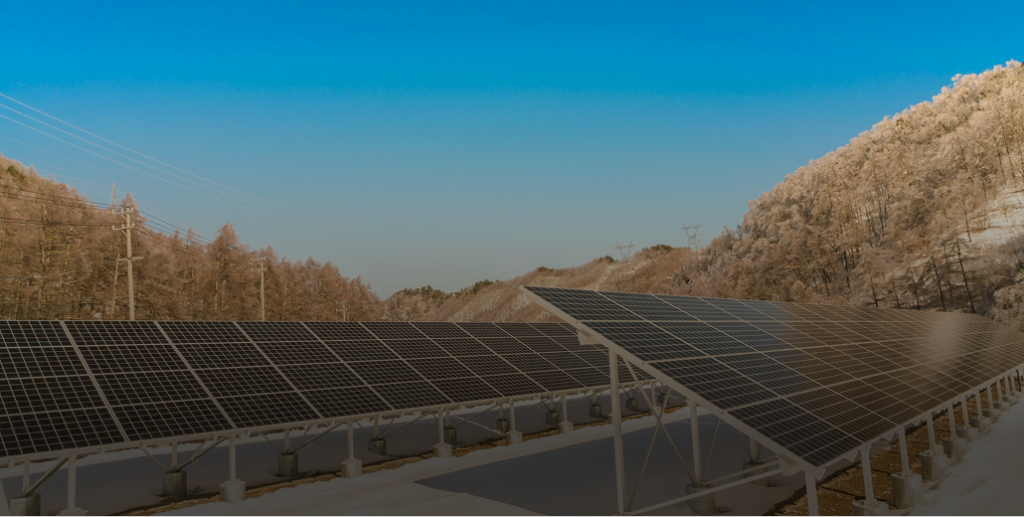
A single-axis ground mount solar tracking system typically costs 25–40% more per watt installed than a fixed-tilt equivalent. Dual-axis systems run 50–80% more. For a 100 kW commercial install in Australia, that’s the difference between roughly $200,000 (fixed tilt) and $250,000–$280,000 (single-axis tracking) or $300,000–$360,000 (dual-axis).
The cost premium isn’t just the tracker hardware itself. Trackers need stronger foundations to handle the dynamic loads of a moving structure, more sophisticated electrical work, motor and controller integration, and additional engineering certification. Each of those line items adds cost that fixed tilt doesn’t carry.
2. Zero moving parts means zero motor failures
Fixed tilt systems have no motors, no controllers, no gearboxes, and no sensors. There’s nothing to fail mechanically. The only maintenance required is occasional panel cleaning and visual inspection of structural fixings.
Trackers have all of those components, and every one of them is a failure point. Motors burn out. Controllers fail. Sensors get fouled. Gearboxes wear. Slew drives stiffen up. None of those failures are catastrophic on their own, but they all require service calls, parts, and downtime.
3. Lower lifetime maintenance costs
Tracker maintenance involves regular motor and actuator inspections, lubrication of moving components, sensor recalibration, controller upgrades, motor replacements (typically every 8–12 years), and inevitable warranty claims. Fixed tilt systems require essentially none of this. Independent industry O&M data shows tracker O&M is meaningfully higher per watt than fixed-tilt over a 25-year operating life, with the gap widening once unscheduled repairs and component replacements are factored in.
For installers quoting commercial clients, this matters because business owners are increasingly asking about total cost of ownership, not just upfront install cost. A tracker that wins on year-one numbers can lose badly on 25-year economics.
4. Simpler installation and faster project timelines
A fixed tilt ground mount install is mechanically straightforward. Foundations, uprights, rear braces, rails, modules, electrical work. The Nova Ground Mount System reduces this further with pre-fabricated holes for tilt adjustment, single-bolt rail clamps, and module clamps with integrated earthing pins.
A tracker install adds motor mounting, controller integration, sensor calibration, software commissioning, and a much more complex electrical scope. For installers, this usually means 30–50% more on-site time per kilowatt, plus specialised crew skills.
5. Better failure resilience in Australian conditions
This one matters more than most installers realise. Australia has wind regions (AS/NZS 1170.2) that range from Region A in most metro areas to Region D in cyclonic zones. Fixed tilt systems handle high-wind events through structural strength alone. Trackers have to either lock into a stow position or actively control the array during high winds, and the failure modes when that goes wrong can be severe.
For commercial projects in higher-wind regions, our guide to the best solar ground mount system for Australian conditions covers the structural and material specifications that matter most.
Nova’s field notes: the dynamic load problem trackers create
In our experience working with installers on ground mount projects, the issue we see most often misunderstood about trackers is dynamic loading. A fixed tilt structure is engineered for static loads (gravity) plus aerodynamic loads (wind on a stationary surface). The numbers are predictable and the engineering is mature.
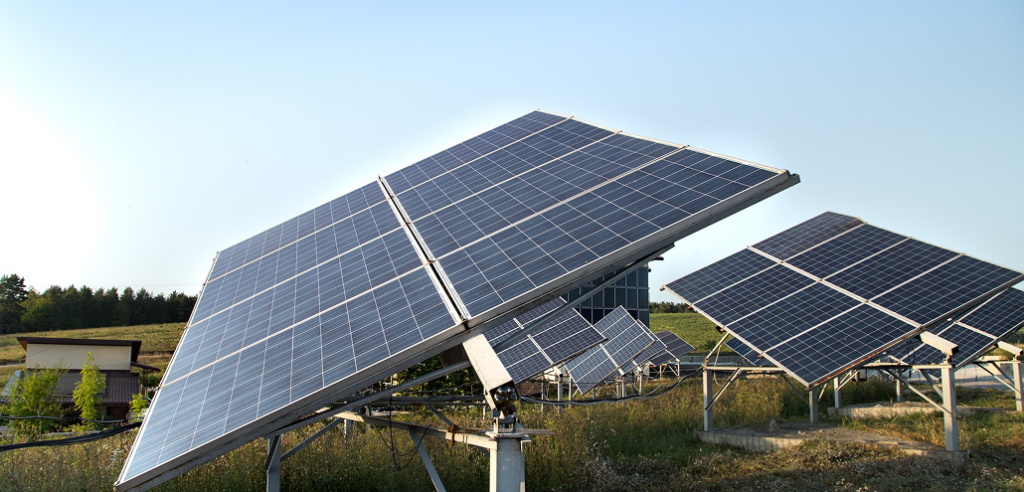
A tracker, even a single-axis tracker, creates dynamic loads. The structure changes geometry through the day. The aerodynamic profile changes. Wind loads vary by position. Stowing the tracker in high winds helps, but only if the stow command actually executes when it needs to. Get the structural engineering right or don’t quote the project. There’s no middle ground here.
When does a ground mount solar tracking system actually make sense?
For all the reasons fixed tilt wins on most projects, there are genuine scenarios where tracking justifies its cost. They’re narrower than most marketing materials suggest, but they exist.
Utility-scale projects above 1 MW
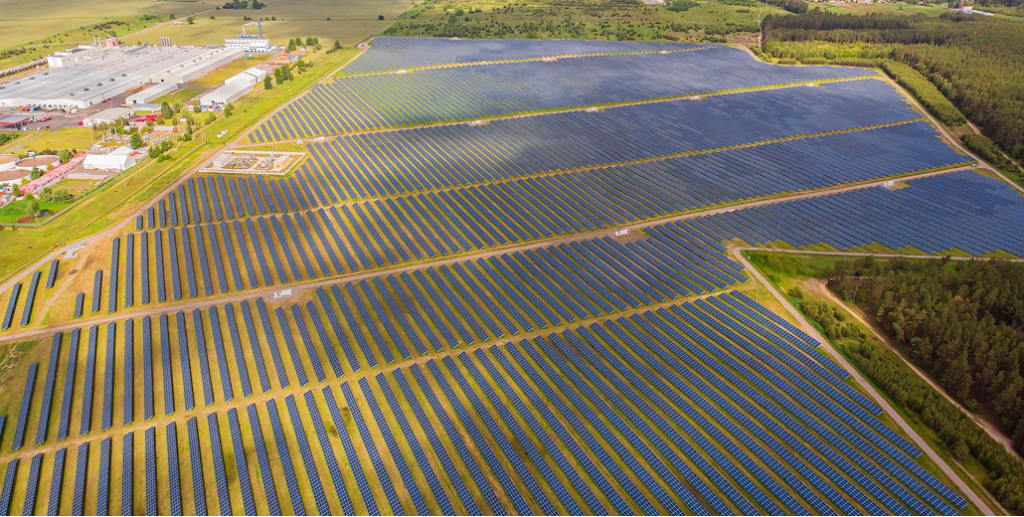
Once a project crosses roughly 1 MW, the per-kilowatt cost of a single-axis tracking system starts to compete with fixed tilt because the economies of scale on tracker hardware kick in. At that scale, the 15–25% energy uplift translates into hundreds of thousands of kilowatt-hours per year, which justifies the higher upfront and maintenance cost over the system life.
This is why most utility-scale solar farms in Australia use single-axis tracking. The maths only works at that volume.
High-irradiance sites with high electricity values
Sites with consistently high solar irradiance (parts of inland Australia) combined with high electricity prices (commercial demand charge structures, or off-grid sites paying $0.40–$0.60/kWh equivalent for diesel generation) can sometimes justify tracking at smaller scales. The yield uplift is more valuable when each extra kilowatt-hour displaces expensive grid power or diesel.
Land-constrained sites where every watt matters
When site footprint is limited but energy demand is high, tracking can squeeze more production from the same land area. This is rare in Australia where most ground mount sites have land to spare, but it happens in specific industrial or agricultural contexts where the project is bounded by something other than land cost.
When tracking probably doesn’t make sense
Residential ground mount, almost always. Commercial projects below 250 kW, almost always. Sites in high-wind or cyclonic zones, almost always. Sites where reliability and minimal call-back jobs matter more than absolute yield, almost always. The pattern is consistent: unless the project has very specific characteristics that favour tracking, fixed tilt is the safer, cheaper, more profitable quote.
Worked example: 1 MW utility-scale ground mount, fixed tilt vs tracking
To make the comparison concrete, here’s what the numbers look like for a 1 MW utility-scale ground mount in Australia. We’ve used 1 MW because that’s the threshold where the tracker conversation actually starts to make financial sense; below this scale, the maths consistently favours fixed tilt. The figures below are anchored to Australian utility-scale benchmarks from CSIRO and AEMO’s GenCost reporting and real-world O&M data from utility-scale operators.
| Metric | Fixed tilt | Single-axis tracking |
|---|---|---|
| Installed cost (AUD) | $1,350,000 | $1,600,000–$1,700,000 |
| Annual energy yield (MWh) | ~1,650 | ~2,000 |
| Annual O&M cost (preventive + reactive) | ~$11,000 | ~$15,000–$20,000 |
| Major component replacement (motors, controllers) over 25 years | None | $60,000–$120,000 |
| Operational risk profile | Very low | Moderate (downtime, weather events, mechanical failure) |
| LCOE advantage at this scale | Competitive | Often competitive in high-DNI Australian sites |
The dual-axis tracker delivers the highest absolute return over 25 years, but at significantly higher upfront capital, more complex maintenance, and greater operational risk. The single-axis tracker delivers the best ratio of yield uplift to added cost. Fixed tilt delivers the fastest payback and the simplest operation.
For most commercial customers, the question isn’t which option produces the most kilowatt-hours. It’s which option delivers reliable returns with minimal operational complexity. For 9 out of 10 commercial projects under 500 kW, fixed tilt is the answer.
For the full breakdown of commercial ground mount pricing across different system sizes, see our guide to commercial ground mount solar cost for installers.
What makes a good fixed tilt ground mount system?
If fixed tilt is the right answer for most projects, the next question is what to look for in the system itself. Five things matter.
Adjustable tilt angle range
Australia spans from latitude 10° in the tropical north to 43° in southern Tasmania. The optimal panel tilt varies significantly across that range. A ground mount system that supports a wide tilt range gives installers the flexibility to optimise for any site without changing products. The Nova Ground Mount System supports 5° to 60° adjustable tilt, which covers every Australian latitude with room for site-specific optimisation.
Foundation flexibility
Australian soil conditions vary enormously, rocky terrain in much of the country, sandy soils across coastal regions, clay in temperate inland areas, and shallow bedrock in many sites. A ground mount system that supports both ground screw and concrete ballast foundations lets installers quote across more sites without changing suppliers.
Corrosion-resistant materials
Most of Australia’s population lives within reach of coastal salt air, and tropical and humid conditions accelerate corrosion of standard galvanised steel. Zinc Aluminium Magnesium (ZAM) coated steel offers significantly better corrosion resistance and is the preferred specification for most Australian ground mount projects.
Fast installation hardware
Pre-fabricated holes, single-bolt rail clamps, module clamps with integrated earthing pins, and minimised component count all reduce on-site time. For installers, system selection that cuts a one-day install from a two-day build directly impacts project margin.
Backed by engineering support
Ground mount projects involve more variables than rooftop, soil reports, structural calculations, foundation specifications, AS/NZS compliance. A supplier that provides engineering support throughout the quoting and installation process reduces the risk of costly rework or compliance issues.
Nova’s field notes: tilt optimisation matters more than installers think
Most installers default to a “standard” tilt of around 25–30° for residential ground mount projects regardless of location. That’s fine in most of Australia, but it leaves yield on the table in southern latitudes (Hobart, southern Victoria) where 35° or steeper would optimise the annual production curve. It also costs more than necessary in tropical latitudes (Darwin, Cairns) where lower angles around 15–20° would actually reduce structural load and material cost without hurting yield much.
When we work with installers on commercial quotes, we always recommend running the site through a quick irradiance modelling tool (PVsyst, Helioscope, or even free Bureau of Meteorology solar data) to confirm the optimal tilt before locking in the structure design. A 5° adjustment based on site-specific modelling can add 1–2% annual yield, which compounds significantly over 25 years.
Build smarter ground mount projects with Nova
At Nova, we’ve spent more than 15 years designing solar mounting systems that make installers’ lives easier and customers’ projects more reliable. The Nova Ground Mount System is built around our “less is more” philosophy: fewer components, single-bolt rail clamps, integrated earthing pins, and pre-fabricated holes for tilt adjustment from 5° to 60°. It supports both ground screw and concrete ballast foundations, comes in Zinc Aluminium Magnesium coated steel for superior corrosion resistance, and installs up to 30% faster than traditional ground mount systems. It’s backed by a 25-year warranty and supported by a technical team that works with you from soil report to commissioning.
Whether you’re quoting a 5 kW residential ground mount or scoping a 500 kW commercial array, speak to the Nova technical team for project-specific support, or explore the NOVA Ground Mount System specifications in detail.
Frequently asked questions
Can I retrofit a fixed tilt ground mount with tracking later?
Generally no. The structural foundations, electrical infrastructure, and panel mounting hardware are fundamentally different between fixed tilt and tracking systems. A retrofit usually means rebuilding the array from the ground up, which costs more than installing tracking from scratch. If there’s any realistic chance of moving to tracking later, design for it from day one. In practice, this almost never makes sense for projects below utility scale.
Do tracking systems work well in cyclonic regions?
This is one of the strongest arguments against tracking in much of northern Australia. Cyclonic wind events (AS/NZS 1170.2 Region C and D) put extreme loads on any solar structure, but the dynamic loads on a tracker can be particularly severe. Most trackers stow flat (horizontal) during high winds to reduce load, but this depends on the stow system functioning correctly during the event. For cyclonic-zone projects, fixed tilt with proper structural engineering is almost always the more reliable choice.
How long do tracking system motors typically last?
Tracker motors and slew drives are typically rated for 15–20 years of operation, but real-world replacement intervals depend heavily on use cycles, environmental exposure, and maintenance quality. Many tracker installations see motor replacements at 8–12 years, controller replacements at 10–15 years, and various sensor and electronic component replacements throughout the system life. These replacements aren’t catastrophic, but they’re predictable costs that fixed tilt systems don’t incur.
What’s the difference between single-axis and dual-axis tracking?
Single-axis trackers rotate around one axis, usually north-south, so panels follow the sun’s daily east-west path. They typically add 15–25% yield over fixed tilt. Dual-axis trackers rotate around two axes, so panels also follow the seasonal north-south movement of the sun. They add another 5–10% yield over single-axis (so 25–35% over fixed tilt), but cost dramatically more and have more components that can fail. Single-axis is the more common choice in commercial and utility-scale projects.
Does Nova offer a tracking system?
No. The Nova Ground Mount System is a fixed-tilt design with adjustable angles from 5° to 60°. We focus on fixed tilt because it’s the right answer for the vast majority of Australian ground mount projects, and because our “less is more” product philosophy is built around reliability, fast installation, and minimal failure points. For utility-scale projects where tracking is genuinely the right choice, we recommend working with a specialist tracker manufacturer.