The ground mount solar cost an installer should quote in Europe in 2026 runs from roughly €0,75 per watt on a large commercial array to €1,70 per watt on a small residential ground mount, installed, before any national incentive. The spread is wide because ground mount pricing is driven by things rooftop quotes never touch: foundations, trenching, soil, frost depth, and wind and snow loads. And the incentive that changes what the client finally pays varies sharply from one European country to the next. This guide breaks down where every dollar goes, how the cost per watt changes with scale, and how to quote accurately without either over-building or leaving an exposed site under-specified.
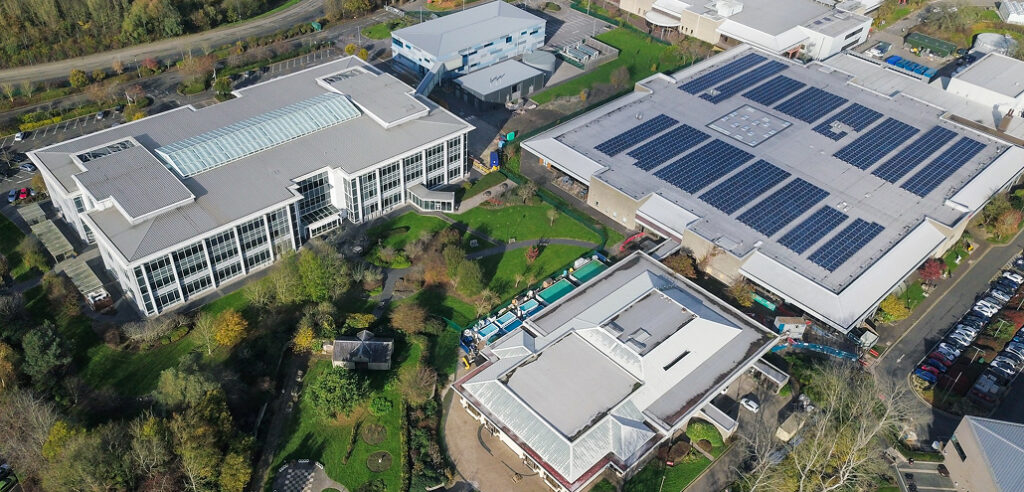
The numbers here are indicative 2026 European benchmarks. Treat them as a framework for building a quote, not a substitute for a site-specific estimate, because the two biggest ground mount variables, foundations and the local wind and snow loads, can only be priced once you know the site, and pricing itself varies significantly between European markets.
Key takeaway
- Ground mount costs more per watt than rooftop because of foundations, trenching, and the mounting structure, before any national incentive is applied.
- Cost per watt falls as the system scales: from around €1,30–€1,70/W at 10 kW to under €1,00/W above 250 kW.
- Foundations are the single biggest variable in a ground mount quote, driven by soil and frost depth, so they can only be priced after a geotechnical report.
- Incentives change what the client pays and vary by country: in Germany, systems up to 100 kWp get an automatic EEG feed-in tariff, larger systems move to the Marktpraemie auction.
- Racking hardware is a small share of the total but the wrong choice drives the biggest lifetime costs through failure and call-backs.
What drives ground mount solar cost (and why it’s not rooftop)
The first thing to understand about the cost of ground mount solar system work is that it carries line items a rooftop job simply doesn’t. Ground mount systems cost meaningfully more per watt than an equivalent rooftop install, and that premium isn’t the panels or the inverter, which cost the same wherever they’re mounted. It’s the foundations, the underground trenching and conduit, and the structural mounting system that holds the array off the ground and resists wind and snow.
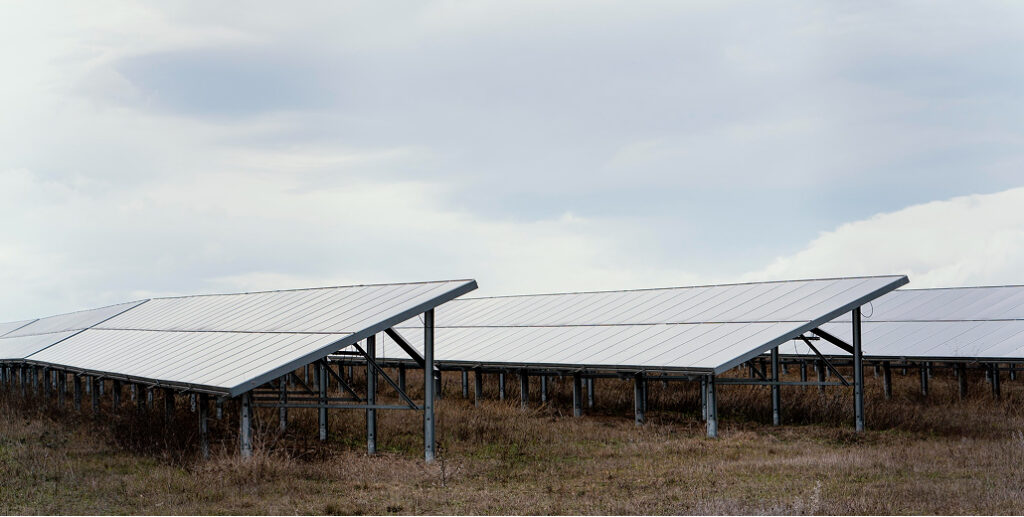
So while a rooftop quote is dominated by panels, inverter, and labour, a ground mount quote has to account for civil works and structure on top of all of that. The panels generate the same power either way. The extra cost buys the ability to put an optimally oriented, optimally tilted array on ground the business already has, and to scale past anything a roof could hold.
Ground mount solar cost per watt by system size
The single most useful number for comparing quotes is the ground mount solar cost per watt, the total installed cost divided by system capacity. It falls as the system grows, because the fixed costs of design, mobilisation, grid application, and site setup spread across more kilowatts. The table below gives indicative 2026 European ranges for ground mount specifically, anchored to IRENA’s European utility-scale cost data and adjusted upward for the civil and structural work ground mount requires.
| System size | Indicative cost per watt (EUR, installed) | Indicative total (ground mount) | Incentive mechanism (Germany example) |
| 10 kW | ~€1,30–€1,70 | ~€13.000–€17.000 | Automatic EEG feed-in tariff |
| 20 kW | ~€1,10–€1,45 | ~€22.000–€29.000 | Automatic EEG feed-in tariff |
| 100 kWp | ~€0,90–€1,20 | ~€90.000–€120.000 | Threshold: at/above 100 kWp moves to Marktpraemie auction |
| 250 kW+ | ~€0,75–€1,00 | from ~€190.000 | Competitive auction premium |
The ranges are deliberately wide for two reasons. First, the two site-specific variables, foundation type and the local wind and snow loads, move the number more than any component choice. Second, pricing varies significantly across European markets: labour rates run from high in Germany and the Nordics to lower in Eastern Europe, and VAT and import logistics differ by country. A figure that holds in Germany will not hold unchanged in Poland or Spain.
For how the structural side of that cost is built, see our guide to ground mount solar racking systems.
Where the money goes: a ground mount cost breakdown
To quote accurately, it helps to see the project as its component parts rather than a single per-watt figure. Here’s where the money goes on a typical ground mount project, and which lines are fixed, which scale, and which are site-driven.
| Cost component | Typical share of a ground mount project | Notes |
| Panels (modules) | Largest single line | Budget vs premium can swing total; module prices have fallen sharply |
| Inverter | Moderate | Premium brands add meaningfully; sized to the array |
| Racking / mounting | Small share of hardware cost | Where quality pays back; cheap racking fails first in wind, snow and corrosion |
| Foundations | Ground-mount specific | Concrete vs ground screw; biggest variable; soil- and frost-depth-driven |
| Electrical & trenching | Higher than rooftop | Underground conduit from array to connection point adds cost rooftop avoids |
| Install labour | Large share; varies by market | From Nordic/German high to Eastern European lower; falls per watt with efficiency |
| Permitting, geotech & grid | Project-dependent | Geotechnical survey and grid connection scale with size; permitting varies by country |
Two lines on that table deserve a closer look because they’re where installers most often misjudge a ground mount quote. The first is the ground mount solar racking cost. The racking hardware itself is a small share of the total, but it’s the component that determines how the whole system performs over 25 years. The difference between a quality system and a cheap one might be a few cents per watt upfront, and tens of thousands of euros over the asset’s life if the cheap one fails. The second is foundations, which is the single most variable line in the whole quote and the one you cannot price from a catalogue.

Nova’s field notes: you can’t quote the foundation until you’ve seen the soil
The most common way a ground mount quote goes wrong is pricing the foundation before anyone has looked at the soil. Concrete ballast footings and ground screws carry very different costs, and which one a site needs depends entirely on the ground. A site that looks perfect for fast, cheap ground screws can turn out to have shallow bedrock, or a high water table, or a frost depth that forces a deeper foundation, and the cost moves with it.
In much of Europe the geotechnical report also needs to capture frost depth and freeze-thaw behaviour, both of which affect foundation design and depth. Build the geotech survey into the quote as a line item and price the foundation only after you have the report. It’s a small upfront cost that protects you from the far larger cost of re-scoping a foundation mid-build.
How incentives change what the client pays, country by country
This is the section where a European cost quote departs most from an Australian one, and where it comes with a twist: the rules vary by country. Under EU Directive RED II, every property owner has the right to generate and self-consume solar electricity, but each member state sets its own support mechanism. Taking Germany, Europe’s largest solar market, as the reference: systems up to 100 kWp receive an automatic EEG feed-in tariff, while systems at or above 100 kWp move into the competitive Marktpraemie auction run by the Bundesnetzagentur, where 20-year premiums are awarded to the lowest bids.

That 100 kWp threshold is a genuine design decision in Germany, much like the way system size changes the incentive elsewhere. A sub-100 kWp system has a predictable guaranteed tariff; a larger system trades that certainty for auction-based pricing but unlocks scale economies on the hardware and installation. When you present a ground mount quote near the 100 kWp line in Germany, show the client both the upfront number and the mechanism, because it can shift which system size is the better investment.
Outside Germany the specifics change but the principle holds: the incentive mechanism and the thresholds that trigger it vary with system size and country. France uses the EDF OA purchase obligation, Italy the GSE net-billing schemes, Spain a simplified self-consumption compensation model, and several markets are shifting from export tariffs toward self-consumption as the primary driver. The lesson for installers working across borders is that the incentive framework has to be confirmed country by country before a quote is finalised, because the same system carries a different net cost to the client in two different member states.
The real cost of cheap: why lowest price loses money
Search for a cheap solar ground mount and you’ll find systems quoted on nothing but sticker price. The temptation is real, especially for installers working on tight margins. But the cheapest ground mount is almost never the cheapest over the life of the asset, and the gap is widest exactly where it matters most: Atlantic-exposed, coastal, and high-snow alpine sites.
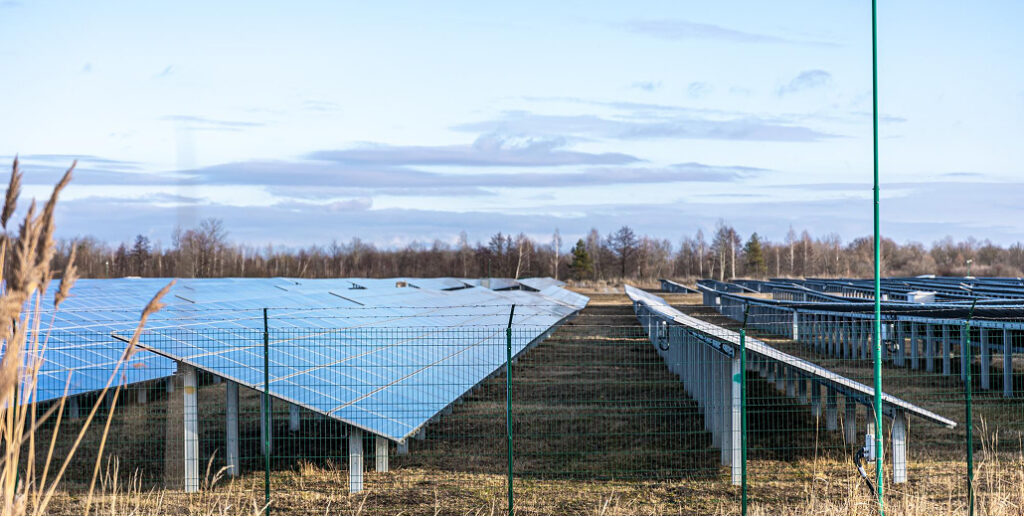
Cheap ground mount systems fail in predictable ways: corrosion at cut edges and bolt holes, connections that loosen under wind cycling and freeze-thaw, and under-specified foundations that can’t resist uplift or carry snow load. Every one of those failures costs more to remediate than the original saving, replacement hardware, re-engineering, downtime, an insurance dispute, and the reputational hit with the client. On an exposed or high-snow site the maths is even more lopsided, because an under-specified system isn’t just more likely to need maintenance, it’s more likely to fail outright. Our guide to the best solar ground mount system for high wind regions covers the specifications that separate a system that lasts from one that’s merely cheap.
The right way to think about it, and the way to present it to a cost-focused client, is total cost of ownership. A system that costs a few cents per watt more upfront but runs for 25 years without a call-back is cheaper than one that saves money on day one and fails in year six. Quoting the cheapest system isn’t winning the job, it’s often just deferring the cost to a warranty claim you’ll wear later.
Nova’s field notes: quote on total cost of ownership, not sticker price
When a client pushes purely on price, the most useful thing an installer can do is reframe the conversation from upfront cost to cost over the life of the system. A ground mount array is a 25-year asset. The question isn’t what it costs to install, it’s what it costs to own, including the call-backs, the remediation, and the risk of failure that a cheap system quietly builds in.
In our experience, the installers who win and keep commercial clients across Europe are the ones who show the total cost of ownership rather than just the lowest number. A quote that explains why the foundation and racking are specified the way they are, and what that buys over 25 years, builds the trust that wins the next job too.
How to build an accurate ground mount quote
Pulling it together, here’s the sequence that produces a ground mount quote you can stand behind.
- Start from the system size the site’s load actually needs, then convert to an indicative cost per watt for that scale and market.
- Get a geotechnical report (including frost depth) before pricing the foundation, since it’s the biggest variable in the quote.
- Price the foundation to the soil (concrete ballast or ground screw), not to a default assumption.
- Confirm the wind and snow loads from the relevant National Annex and specify racking certified for them.
- Add the ground-mount-specific lines rooftop quotes skip: trenching, underground conduit, and civil works.
- Confirm the national incentive mechanism and threshold, and show the client the net cost under the scheme that actually applies.
- Quote on total cost of ownership, and document why each component is specified as it is.

Build better-value ground mount projects with Nova
At Nova, we’ve spent more than 15 years designing solar mounting systems that make installers’ quotes more competitive and their projects more profitable over the full 25-year life. The Nova Ground Mount System is built around our “less is more” philosophy: fewer components, greater engineering spans that reduce post and foundation count, single-bolt rail clamps, module clamps with integrated earthing pins, and pre-fabricated holes for tilt from 10° to 30°. It supports both ground screw and concrete ballast foundations so the foundation can be matched to the site, comes in Zinc Aluminium Magnesium coated steel for corrosion resistance that protects the asset, and is snow load rated for European winters, structural stability tested, and corrosion resistance tested. It installs up to 30% faster than traditional ground mount systems, which lowers install labour, and is backed by a 25-year warranty.
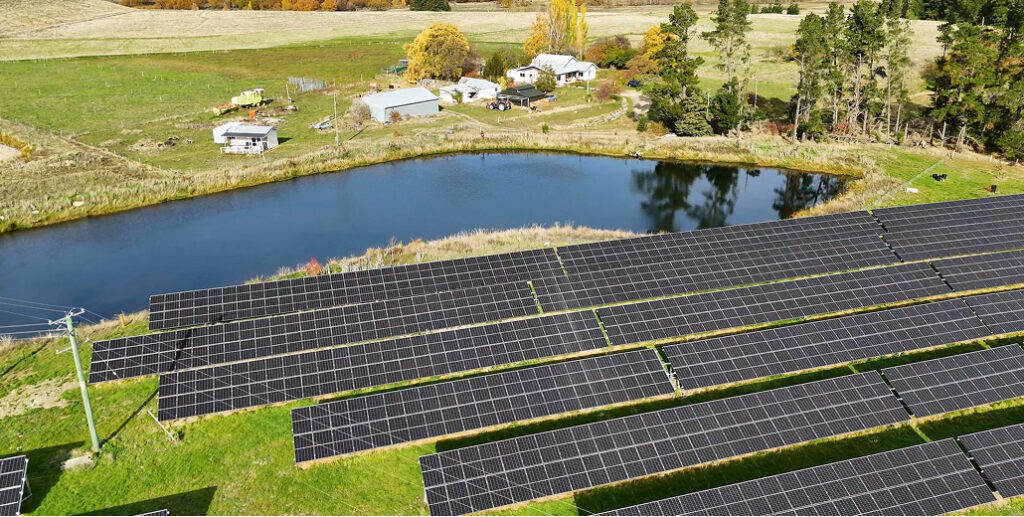
Whether you’re quoting a 10 kW rural ground mount or scoping a multi-megawatt commercial array, speak to the Nova technical team for project-specific pricing and engineering support, or explore the NOVA Ground Mount System specifications in detail.
Frequently asked questions
How much does a ground mount solar system cost in Europe in 2026?
Indicatively, a ground mount system runs from around €1,30 to €1,70 per watt installed at 10 kW, down to €0,75 to €1,00 per watt above 250 kW, before national incentives. That’s higher than the equivalent rooftop system because of foundations, trenching, and the mounting structure. Pricing varies significantly between European markets, so the figure in Germany differs from Poland or Spain, and the exact number depends on the site’s soil, frost depth, and wind and snow loads.
How much of the cost is the racking?
The racking hardware itself is a relatively small share of a ground mount project. But it has an outsized effect on lifetime cost, because the racking is what determines whether the system survives 25 years of wind, snow, salt and freeze-thaw or fails early and generates call-backs. It’s the wrong place to cut cost, even though it looks like an easy saving on the quote.
Why do ground mounted solar panels cost more than rooftop?
Ground mounted solar panels cost more than rooftop because of the work that happens below and around the array rather than the panels themselves. Foundations (concrete or ground screws), underground trenching and conduit from the array to the connection point, and the structural mounting system all add cost that a roof install doesn’t carry. The panels and inverter cost the same either way. The premium buys optimal orientation and tilt, and the ability to scale beyond what a roof can hold.
Do incentives for ground mount solar differ across Europe?
Yes, significantly. Each EU member state sets its own support mechanism under EU Directive RED II. Germany uses an EEG feed-in tariff up to 100 kWp and a competitive Marktpraemie auction above it; France uses the EDF OA purchase obligation; Italy uses GSE net-billing schemes; Spain uses a simplified self-consumption compensation model. The thresholds and mechanisms vary, so the net cost to the client must be worked out for the specific country before a quote is finalised.
Is a cheap ground mount system ever the right choice?
Only when “cheap” means efficient rather than under-specified. A system that’s cost-effective because it uses fewer components and installs faster is good value. A system that’s cheap because it uses thinner steel, lower-grade fasteners, or an under-engineered foundation is building in a failure point, and that’s most dangerous on exposed, coastal and high-snow sites. The right test is total cost of ownership over 25 years, not the sticker price on day one.