Tilt vs Flat Solar Panel Mounts: Which Is More Efficient?
When it comes to selecting the mounting infrastructure for your solar panels, it plays a significant role in your energy production potential. In the tilt vs flat solar mounting debate, the focus might be on the type of panel you acquire or the size of the inverter you need. Little do most people know that mounting angles play a crucial role in determining energy production potential, payback, and even efficiency.
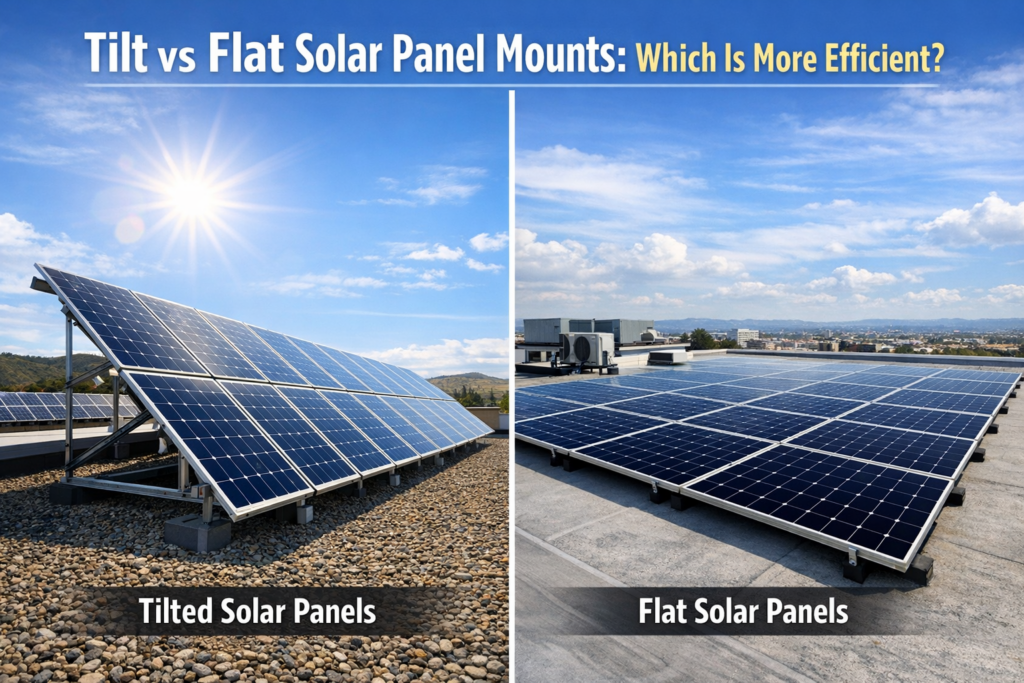
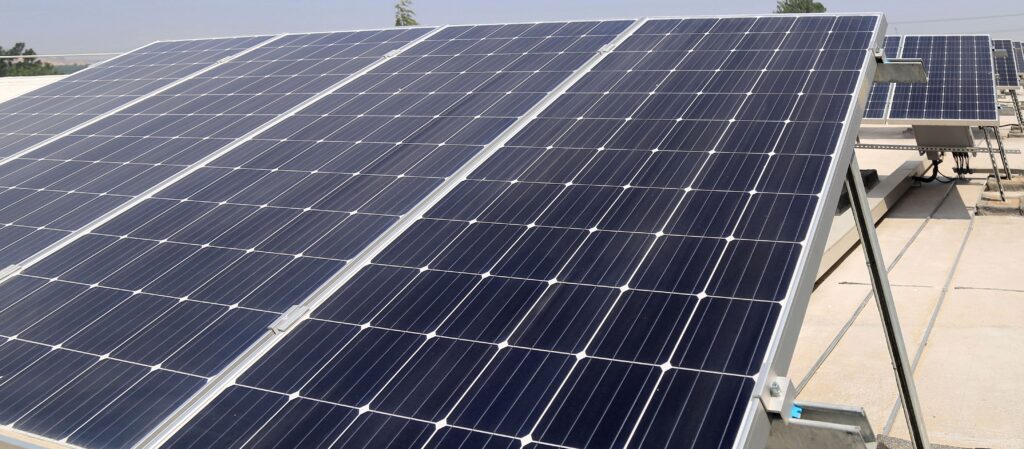
A solar panel tilt mount and a flat mounting system are designed for different applications, depending on the type, space on the roof, and various factors like wind resistance and intended usage. Modern solutions, such as adjustable solar panel tilt mount brackets, make it easier for installers to achieve optimal angles without requiring complex structural modifications.
Key Takeaway
- Choosing an appropriate mounting design for solar panels, either tilt or flat, has a significant influence on energy efficiency, payback periods, and performance.
- Tilt mounts, with the use of adjustable solar panel tilt mount brackets, enhance the capture of sunlight all year round, including winter.
- Flat mounts are easier to install and provide a higher panel density, but could decrease energy savings by 10-25 percent per year.
- Hybrid or adjustable tilt solutions provide the most optimal compromise between efficiency, space, and overall energy savings potential on a tilting solar panel roof mount.
Why Solar Panel Angle Matters for Energy Output
We’ve observed that solar panels can produce the maximum electricity if the sunlight falls on them as close to 90° as possible. If the solar panels are installed flat, they will receive sunlight at an angle in the morning, afternoon, and winter seasons, leading to less utilization of solar energy. In fact, studies show that the difference in electricity generation between optimized and poorly angled or flat solar panels could vary by 10 to 25% per year.
Another important consideration is the seasonal movement of the sun. Compared to other seasons, the sun in winter is positioned lower in the sky, resulting in less sunlight for flat panels throughout the day. For solar panel tilt mount, their position stays more in line with the direction of the sun, thus providing better utilization of the sun’s power, particularly since the sunlight hours are already limited. Field measurements have indicated that a tilt system can beat a flat panel setup by nearly 10% or more per year.
Finally, on flat commercial roofs where roof pitch offers no natural angle advantage, engineered tilt structures become especially important. Solutions such as Nova’s Adjustable Tilt Mounting System and Nova’s A-Frame Tilt basically allow installers to control panel orientation precisely, ensuring that sunlight hits the panel surface at more efficient angles throughout the year.
Tilt Solar Mounts: Maximising Energy Production Through Correct Panel Angles
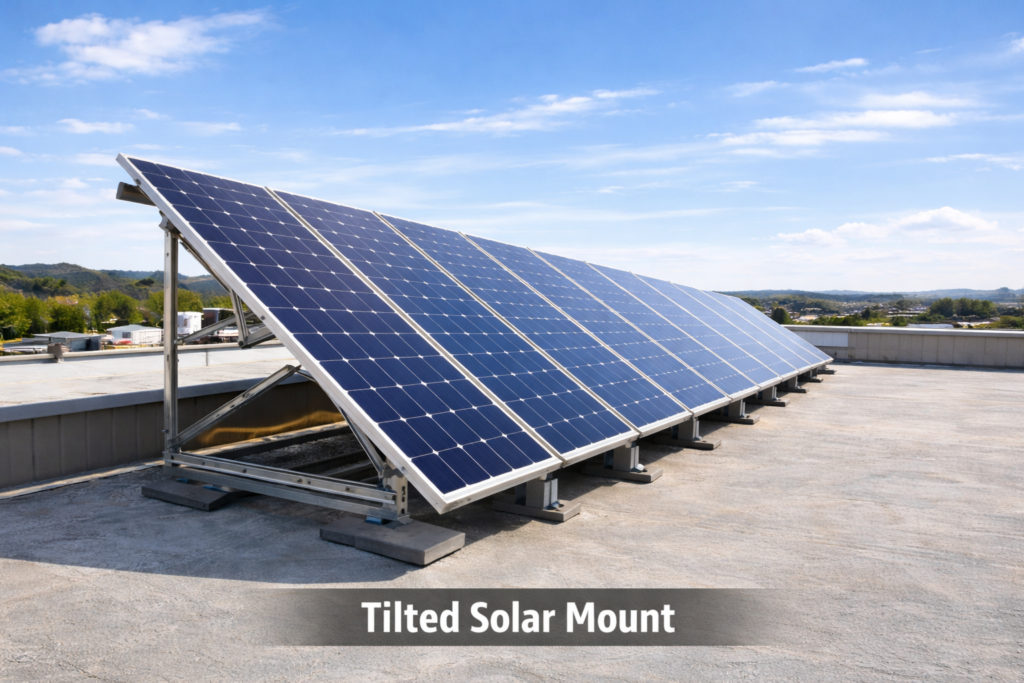
Tilt solar mounting systems usually come in either fixed-angle tilt or variable-angle tilt, depending on the needs of the project. These mounting systems help in improving the angle of incidence, resulting in enhanced energy intensity on the panel’s surface area and ultimately raising the electricity output. They are quite useful in areas experiencing pronounced seasonal changes.
A fixed tilting solar panel roof mount is usually quicker to install, and its tilt angles are usually fixed at 5°, 10°, or 15°. For adjustable setups, its variant, the solar panel adjustable tilt mount, is only adjustable for installations. Basically, when an installer stocks one solar product, it can fit into several other projects.
How Tilt Solar Mounts Improve Performance
Tilt mounting improves performance by directly addressing how sunlight interacts with the panel surface. Their benefits include:
- Panels face the sun more directly throughout the day, increasing energy capture
- Improved angle of incidence keeps sunlight closer to 90° for longer periods
- Winter performance improves significantly due to better alignment with low sun angles
- Panels shed dust and debris more effectively, reducing soiling losses
- Nova tilt systems are engineered to help panels capture optimal amount of sunlight
The Hidden Trade-Offs of Tilt Mount Systems
Though they have advantages in terms of performance, tilt systems bring in certain issues that installers must consider. Oftentimes, tilt systems require a larger number of racking components to provide structural support compared to a flat system.
Another aspect worth noting is the row spacing. For tilted rows to avoid self-shading, especially in the morning and afternoon, it is necessary to increase the spacing between tilted rows. Increasing the tilted row spacing leads to a reduced number of panels on the roof, potentially restricting the system size on sites with area constraints.
Further, for sites situated in the southern hemisphere, the tilt direction of north-facing roofs results in increased roof area per kW installation.
Real-World Considerations for Tilt Systems
- Higher upfront cost due to additional materials and engineering
- More complex installation compared to flat mounting
- Row spacing required to prevent shading losses
- Reduced panel density on limited roof areas
- Stronger performance in winter and shoulder seasons
Is Solar Panel Tilt Mount Cost-Efficient Over Time?
Although the upfront costs of solar panel tilt mount systems are somewhat higher, their efficiency should be estimated over the life span of the system. That’s because the higher number of kilowatt-hours annually from the tilted panels often improves the payback return. Basically, since the power requirement is large, the difference often translates to a shorter payback period.
Business Research Insights has indicated that optimised tilt systems can realize their costs of installation 2 to 2.5 years earlier than flat systems, thanks to the additional energy outputs attainable each year, according to commercial applications.
Flat Solar Mounts: Prioritising Space Efficiency and System Simplicity
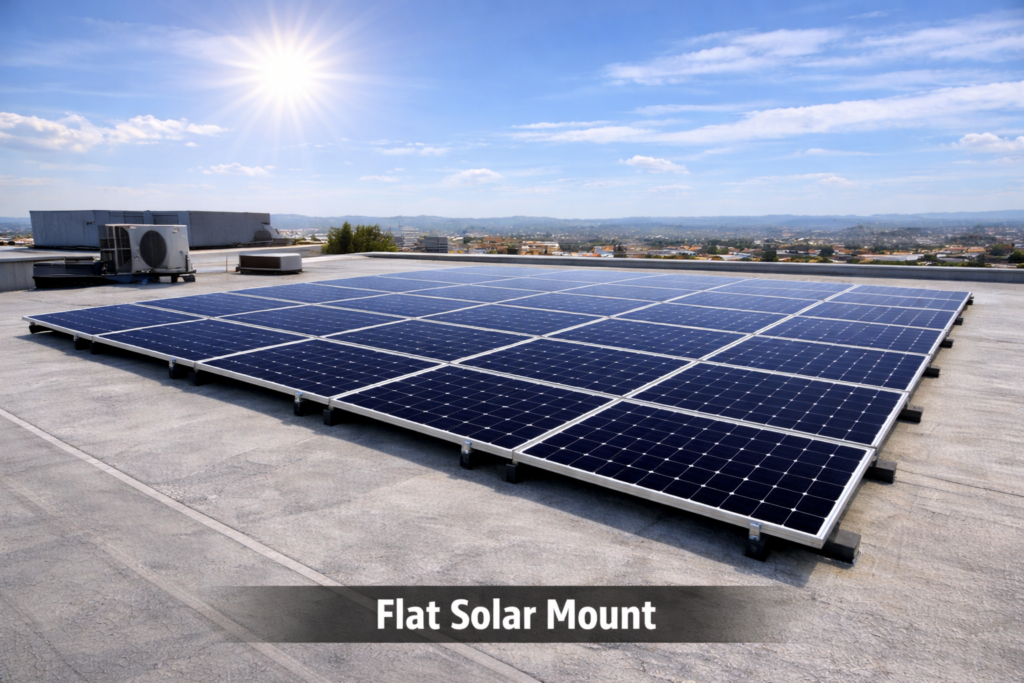
Generally, flat solar panel mounts are used when the panels are fixed to the roof almost flat, with no tilt or just minimal angles. The main benefit of flat installations is space maximization because flat solar panel installations can hold higher densities in the same space on the roof compared to pitched installations.
Nova’s Flat Roof Solar Mounting System is also easier and quicker to install, with fewer components and less engineering complexity. In areas with high sun angles or with strict budgets in mind, the flat configuration of the panels would be practical and still widely feasible to implement. But in a flat-mounted panel, there is a possible annual energy reduction of 5 to 10%.
When Flat Mounting Makes More Sense
The situations where flat mounting is acceptable include:
- Large roof area with minimal space constraints
- Lower upfront budget consideration
- Lower wind exposure regions
- Projects prioritising total system capacity over per-panel efficiency
- Faster, simpler installation timelines
Tilt vs Flat Mounting on Flat Roofs
Flat roofs are well adaptable to tilt mount installations, especially in Australia, where low-pitched or flat concrete roofs are common in commercial as well as modern residential buildings. The structures are capable of efficient load-bearing and clear roof space. Basically, there are no natural pitches in flat roofs; therefore, tilt mounting installations are necessary to generate efficient solar performance.
It is even further supported by the climate of Australia. This is mainly because of the high angle of the sun during the summer months and the low path of the sun during the winter. This implies that solar panels are not able to cope with the varying weather conditions when they are laid flat on the surface. However, when laid on tilt, it can face the sun at all times.
Tilt vs Flat Solar Mounts: Detailed Performance Comparison
| Feature | Tilt Solar Mounts | Flat Solar Mounts |
| Energy Output per Panel | Higher due to direct sun incidence | Lower due to shallow angles |
| Winter Performance | Strong | Weaker |
| Installation Complexity | Moderate to high | Low |
| Upfront Cost | Higher | Lower |
| Panel Density | Lower | Higher |
| Maintenance Considerations | Leaves and dirt fall off panels by themselves. | Requires frequent cleaning and care |
| Typical Annual Gain | 10–25% higher per panel | Baseline |
How to Decide Between Tilt and Flat Solar Mounting
Choosing between tilt and flat mounting should be based on engineering analysis rather than assumptions. Some of the necessary considerations include:
- Roof Type: If you have a slanted roof, then going for a flat mount is quite acceptable. But in a situation where the roof is flat, opting for a tilt solar mount can achieve better results in the long run
- Available Space: The space available for setting up your mount is another vital consideration. That’s because where you have a small space on the roof, then erecting a tilt solar may prove to be a challenge.
- Energy Goals: You have to consider your energy goals when selecting between a tilting solar roof mount and flat systems. Basically, if you want to accumulate more energy for your structure, then tilt mount systems are always the preferred option.
- Budget: While efficiency is always ideal, considering your budget is necessary before choosing between any mounting systems. Since flat mount systems are often cheaper than their counterparts, most owners end up choosing them over tilted solar roof mounts. That’s because only the solar panel tilt brackets can add up to hundreds of dollars, not to mention the price for hiring a professional installer.
- Wind Regions: Weather conditions are another point. There are areas in the Australian landmass known to have strong winds, especially in coastal and wide rural areas. In some cases, a tilted engineered system may not be capable of withstanding the effects of the wind, while the panels remain secure. In these instances, it is always better to go for a flat solar mount to reduce risk and complications.
Talk to Nova About the Right Mounting System for Your Roof
No two roofs are identical, either in terms of design, orientation, or exposure. A flawed design could result in decreased energy performance, shade-related issues, or compromised future value. Based on roof size, wind zones, constraint considerations, and use, our team provides mounting strategy recommendations, including fixed, tilt, or trackers.
Whether you need heavy flat mounts, fixed-angle tilting mounts, or variable mounts for optimized-performance applications, the mounting solutions developed by Nova enable long-term effective functioning.
Frequently Asked Questions (FAQ)
Is a solar panel tilt mount always better than flat mounting?
Solar panel tilt mount improves per-panel performance, but flat mounting may deliver better results on large roofs where panel density matters more than individual panel output.
Do tilt systems increase wind load risk?
Tilt systems must be engineered correctly to manage wind uplift. Properly designed systems, such as Nova’s tilt mounts, account for wind regions and ballast requirements.
Are adjustable tilt systems worth it?
Adjustable tilt can improve performance in certain scenarios, particularly where seasonal optimisation is beneficial. They are most effective when energy yield gains justify added complexity.
Can flat and tilt systems be combined on one roof?
Yes. Hybrid designs are common on large commercial roofs and often deliver the best balance of performance and capacity.