Comparing the versatility of rail-based mounting with the cost-saving limitations of rail-less systems.
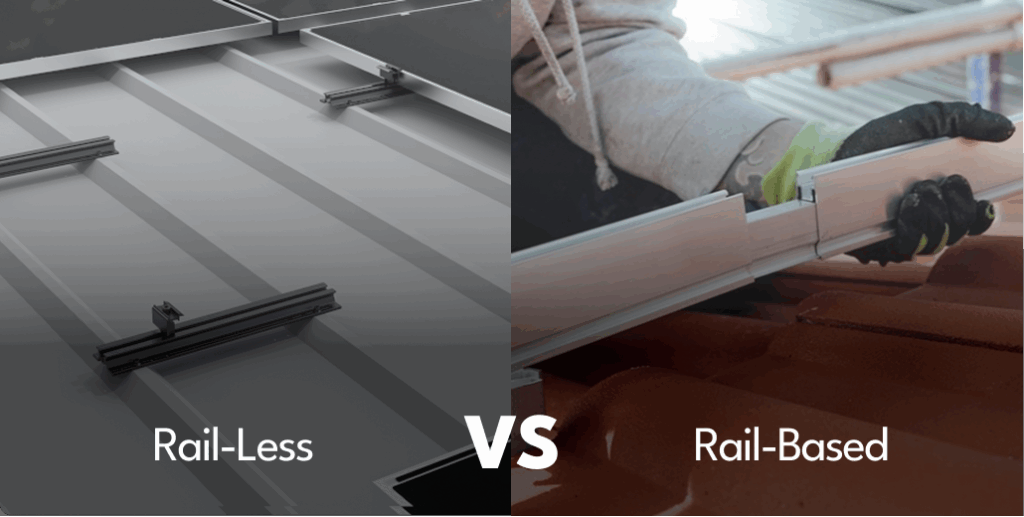
When you are planning a solar installation, the panels often get all the glory, but the solar racking system is the unsung hero that keeps your investment secure. The choice between rail based and rail-less solar racking is more than just a cosmetic decision; it impacts structural integrity, installation speed, and long-term reliability.
For most Australian homeowners, understanding the trade-offs between these two solar mounting rail systems is critical. While railless solar mounting offers cost advantages, rail based racking remains the industry standard for its unmatched flexibility.
Rail Based Racking: The Versatile Industry Standard
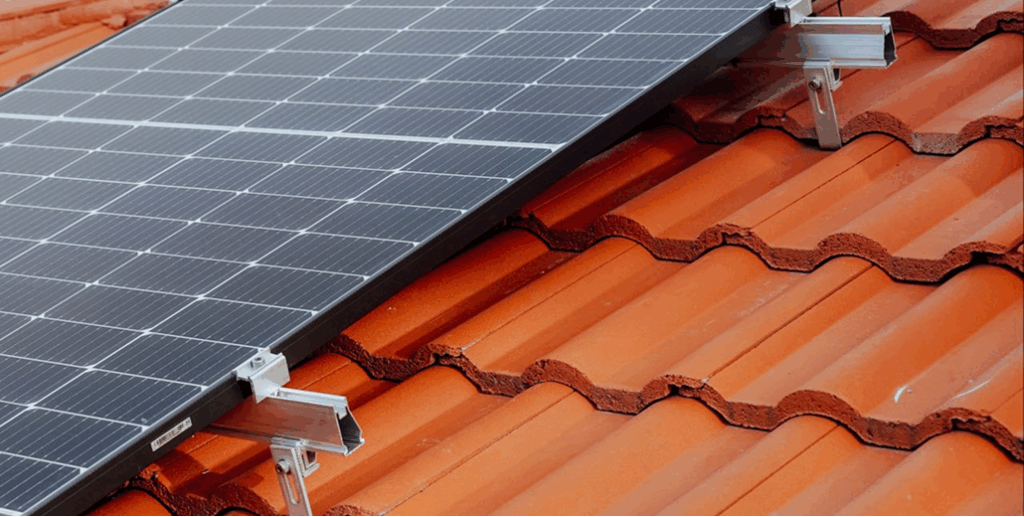
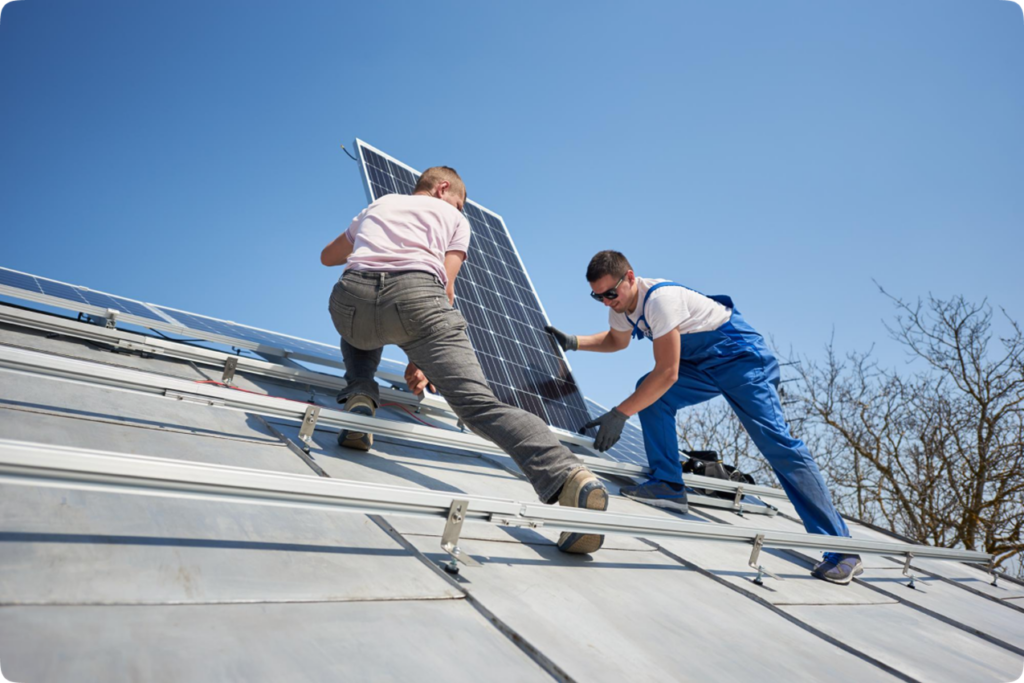
Rail-based systems are the backbone of the solar industry. In this setup, aluminum rails are secured to the roof’s rafters or purlins, and the panels are clamped onto these rails.
This design is the “default” for a reason. As the U.S. Department of Energy notes in their system design basics:
“Rack mounting is currently the most common method because it is robust, versatile, and easy to construct and install.”
Unmatched Flexibility for Uneven Roofs
The primary advantage of a rail-based system is flexibility. Roofs are rarely perfectly flat. A rail-based system allows installers to adjust the height of the attachments at the bottom, leveling out the rails before the panels are even laid down. This ensures your solar array looks flat and flush, even if the roof beneath it is wavy or uneven.
Structural Integrity in High Wind Zones
In areas with high wind loads, structural integrity is non-negotiable. Rail-based systems allow for “extra fixing points.” If you are in a high wind zone, you can simply add an extra rail or more roof attachments to distribute the load.
This aligns with safety standards which require installers to account for environmental stresses. According to SafeWork NSW, installers must:
“ensure manufacturer requirements are followed when installing mounting points for the solar panels framing, considering the highest wind speeds for the region.”
With rails, your purlins can be at whatever distance the roof structure dictates, and the rails bridge the gap, providing a secure mounting point exactly where the panel needs it.
Rail-Less Solar Racking: The Cost-Effective Challenger
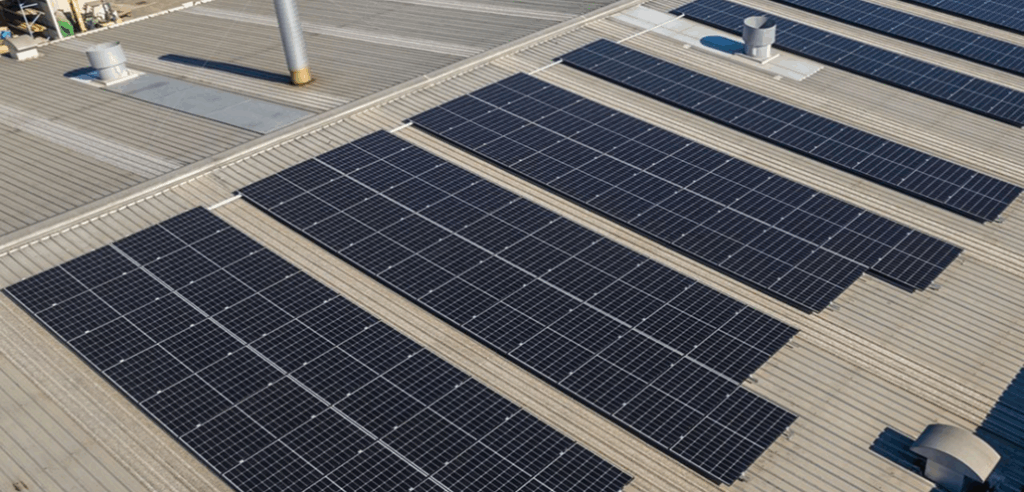
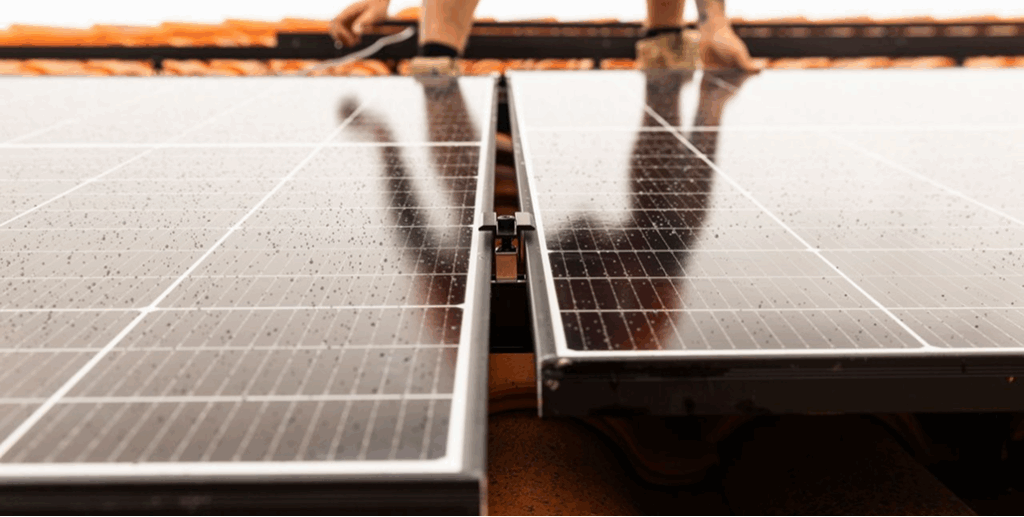
Rail less solar racking (or railless solar mounting) removes the long aluminum rails from the equation. Instead, panels are attached directly to roof mounts or to each other.
The Pros: Speed and Cost
The biggest selling point here is cost. Because you don’t need to purchase long aluminum rails, the material cost is significantly lower. Furthermore, these systems have fewer components, which can make them quicker to install. There is less material to transport to the site and less weight on the roof.
The Cons: Zero Tolerance for Imperfection
However, this cost saving comes with significant rigidity. Rail-less solar racking has a lot less flexibility than its rail-based counterpart.
- Restricted Purlin Spacing: It only works on certain roofs where the purlin spacing aligns perfectly with the panel’s required clamping zones.
- Uneven Roofs: If you install a rail-less system on an uneven roof, you force the panels to conform to the roof’s undulations. This can bend the panels, leading to micro-cracks and cell failure over time.
Solar Victoria highlights the precision required for these installations in their audit checklists, warning installers to check clamping zones rigorously:
“Ensure the design will fit on the roof space compliantly… consider the dimensions of the panels and the clamping zones as well as the fixing points to the roof structure.”
If the mounting points don’t line up exactly with your roof’s rafters, you cannot simply slide a rail over to bridge the gap. You are stuck with where the roof structure is.
Which Solution Should You Choose?
If you are looking for a solution that works for most roofs, choose rail-based. It is the safe, industry-standard bet that guarantees a level array and structural compliance regardless of your roof’s quirks.
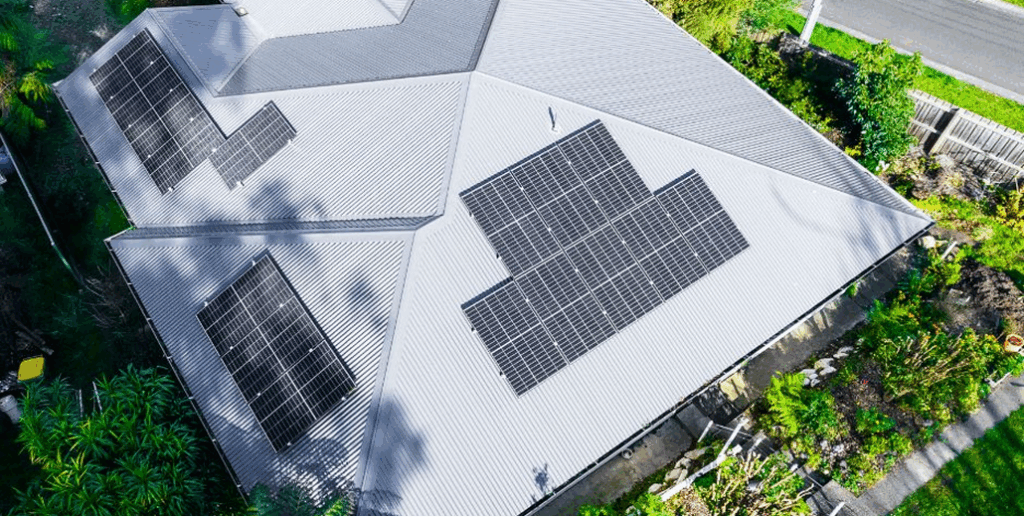
However, for specific situations—such as a perfectly flat, modern metal roof with optimal purlin spacing—you can save money with rail-less solar racking.
Not Sure Which System Suits Your Roof?
Every roof is unique, and choosing the wrong racking system can lead to bent panels or structural issues.
Contact NOVA for a consultation today.
Our experts will analyze your specific roof type and wind zone to determine if you can safely save money with a rail-less system or if you need the robust protection of rail-based racking.
Sources & References
- [1.1] SafeWork NSW: Guide to Safe Solar Panel Installation
- [2.1] Solar Victoria: Solar PV Audit Checklist and Guidance
[3.1] U.S. Department of Energy (Energy.gov): Solar Photovoltaic System Design Basics